Here is the weekly planning first week of new term...
Showing posts with label RTC12. Show all posts
Showing posts with label RTC12. Show all posts
Monday, May 9, 2016

Wednesday, April 1, 2015
Teaching As Inquiry 2015
Personal Inquiry
One of the important parts of our own personal development is to undertake our own 'teaching as inquiry'. Lots of people over think this and put teaching as inquiry as something mystical. This is not that case at all - rather it is about unpacking the thoughts you have on your impact in the classroom.
There are two places where Waihi College appraisal addresses teaching as inquiry. I've also made previous postings on this blog on this topic (click here for the link).
This year we will attempt to focus our teaching as inquiry into one of our PLG's (so this can be from our first one - now to July or our second one - July to Dec). I've had a few queries around this so I thought that I'd offer some options for staff.
This post relates to RTC #12. "Use critical inquiry and problem-solving effectively in their professional practice."
 |
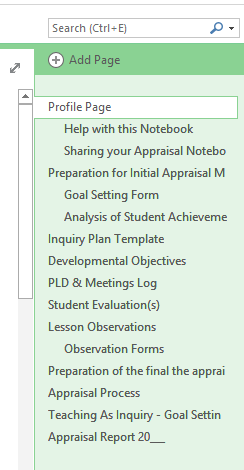
| From the OneNote document |
There are two places where Waihi College appraisal addresses teaching as inquiry. I've also made previous postings on this blog on this topic (click here for the link).
This year we will attempt to focus our teaching as inquiry into one of our PLG's (so this can be from our first one - now to July or our second one - July to Dec). I've had a few queries around this so I thought that I'd offer some options for staff.
- If you are feeling confident on conducting your own Teaching as Inquiry - then feel free to make a start on that (if you haven't already).
- I'd put out there my own inquiry as a template for staff to see what it's about.
- Create a generic inquiry that can be used by staff (this is my least preferred option - but should create more comfort for staff around this).
This post relates to RTC #12. "Use critical inquiry and problem-solving effectively in their professional practice."
Tuesday, March 24, 2015
Professional Learning Groups
PLG's First Half of Year
All the staff here at the college have now started their Professional Learning Groups for the first half of 2015 (until July). We have seven groups up and operational.
Here is a list of which teachers are in which groups...

Here are the links to the web addresses of the PLG's blogsites...
The intent of all of our PLGs is about collaboration and professional development. It is also an opportunity for you as a professional operate with a degree of autonomy in your learning.
Collaborative - The idea is that you take people with you in your learning (sometimes you will lead other times you will shown). It is about recognising that those in this learning group share an interest in developing their practice around the same topic.
Development - The time you spend together working on your topic should ultimately add to the quality of your classroom relations and practices. You will be expected to journey through with others (some will be at different stages of development)... but ultimately you'll want to get some tangible benefits from joining this group.
Rules of Belonging to Waihi College PLG
All the staff here at the college have now started their Professional Learning Groups for the first half of 2015 (until July). We have seven groups up and operational.
Here is a list of which teachers are in which groups...
Here are the links to the web addresses of the PLG's blogsites...
The intent of all of our PLGs is about collaboration and professional development. It is also an opportunity for you as a professional operate with a degree of autonomy in your learning.
Collaborative - The idea is that you take people with you in your learning (sometimes you will lead other times you will shown). It is about recognising that those in this learning group share an interest in developing their practice around the same topic.
Development - The time you spend together working on your topic should ultimately add to the quality of your classroom relations and practices. You will be expected to journey through with others (some will be at different stages of development)... but ultimately you'll want to get some tangible benefits from joining this group.
Rules of Belonging to Waihi College PLG
- Get Involved. Teachers often feel that professional development is something that is done to them. The freedom of belonging to a PLG is to have a degree of autonomy. You can take your learning where you want (especially where you feel you have the greatest benefit).
- Respect Others. This should be a given but worth remembering. Traditionally teaching is an isolated profession and some staff may feel reluctant to share. Having a group with a high degree of respect is vital.
- Start ASAP - Please break the ice with your fellow teachers in your group. Holding off will make it harder to get involved. Set a good bench mark for the group.
- Engage With RTC's. The next five months will provide you with plenty of opportunity to reflect upon the 12 registered teacher criteria. Take some time to engaged for 10 mins a fortnight with these.
- Implement. Lots of the topics of the PLGs this cycle are ideas. There will be plenty of time to talk, debate and theorise about the topic. But nothing beats trying things out. Waihi College is a school of innovation, we genuinely encourage you to try new things (mistakes are welcome).
- Feedback with Others. This is a collective learning experience. Let your group members know what it is your trying. Let them know how things are going.
This post relates to RTC #5. "Show leadership that contributes to effective teaching and learning i. actively contribute to the professional learning community." And RTC #12. "Use critical inquiry and problem-solving effectively in their professional practice."
Monday, March 23, 2015
Book Review
How Children Succeed : Grit, Curiosity and the Hidden Power of Character. By Paul Tough


This is a book that I was very eager to read. I'm a fan of education around character and believe that schools are charged with more than qualifications. Paul Tough, himself a self confessed 'drop out' has taken the task of comparing intelligence with character. I felt that this book was a good read and focused well upon the hidden curriculum.
I felt myself linked closely to Paul's life experiences, he has a great chapter in there about being a father and looking deeply into the educational experience of children.
Much of How Children Succeed is based upon experience/case examples. All of the ideas Paul presents are illustrated with some real life people and their ability to succeed where they would not expected to be.
There were some very good quotes “The best way for a young person to build character is for him to attempt something where there is a real and serious possibility of failure.” (p. 85) I think that this is something that our modern educational system can be guilty with. We offer much of our assessment in 'low risk' assessments - I've never personally done a standard, I was raised in an examination environment where all the year was measured in a one off test. [my preference is not for a major one off exam].
Another thing for the plus side of How Children Succeed is the chapters he devotes to the study of chess and intelligence and determination.
I would recommend this book for teachers, especially those with children. Tough offers more in the way of observation than solution. I found myself agreeing with much of Paul's points and enjoyed his illustrative writing style.
Here is a nice YouTube clip where Paul is interviewed about his book.
This post relates to RTC #12 - "Engaging with professional literature and reflecting on ones practice and RTC#5
Sunday, March 22, 2015
Latest Staff Books
Educational Reading Books.
Here are some new titles that we've added to our staff catalogue. Please do take the time to have a read of any of these (school holidays are coming up which will give you some time).

I would greatly appreciate it if you can review any of these titles for other staff.
This post relates to RTC #12 - "Engaging with professional literature and reflecting on ones practice and RTC#5 - "Actively contributing to a learning community".
Here are some new titles that we've added to our staff catalogue. Please do take the time to have a read of any of these (school holidays are coming up which will give you some time).
I would greatly appreciate it if you can review any of these titles for other staff.
This post relates to RTC #12 - "Engaging with professional literature and reflecting on ones practice and RTC#5 - "Actively contributing to a learning community".
Sunday, September 7, 2014
Appraisal - Teaching as Inquiry
This post is based upon the document in your OneNote appraisal folder.
 Personal Professional Development Plan
Teaching as Inquiry is the formalisation of common practice amongst professional educators. We have all been doing this process since we've started teaching. If you've ever thought "how can I get through to these guys?" you've started the Teaching as Inquiry process.
With the front end of the NZC specifically mentioning inquiry (and the 12th registered teacher criteria being about Teaching as Inquiry) it is expected that we are formally recording some of our personal inquiry.
 What is Teaching as Inquiry?
Practically it is about the professional practice of unpacking our teaching, looking at the needs of students, trying new things and reflecting back on these practices. It is ideally about teacher deliberately crafting themselves into better practitioners.
What isn't Teaching as Inquiry?
It is not a one off event (you need systematically reflect)
Personal Professional Development PlanTeaching as Inquiry is the formalisation of common practice amongst professional educators. We have all been doing this process since we've started teaching. If you've ever thought "how can I get through to these guys?" you've started the Teaching as Inquiry process.
With the front end of the NZC specifically mentioning inquiry (and the 12th registered teacher criteria being about Teaching as Inquiry) it is expected that we are formally recording some of our personal inquiry.
What is Teaching as Inquiry?Practically it is about the professional practice of unpacking our teaching, looking at the needs of students, trying new things and reflecting back on these practices. It is ideally about teacher deliberately crafting themselves into better practitioners.
What isn't Teaching as Inquiry?
It is not a one off event (you need systematically reflect)
It is not above your workload
- it considered a vital component (hence one of the 12RTC's) of your
workload.
It is not a solo event - we
need to have high trust partnerships with other teachers to help us
through each Inquiry.
Handout - This is two versions of explaining Teaching as Inquiry. They really cover the same thing. The page that has the heading "Inquiry Plan Template" is one that I've adapted to us here at Waihi College (naughty I can't reference the original source document/author).
Common Queries or Hang Ups...
- How long should an Inquiry take?
- Can I do it on anything?
- What if I get stuck (or time is too precious)?
- Who should be involved?
This post relates to RTC #
12. use
critical inquiry and problem-solving effectively in their professional practice
Subscribe to:
Posts (Atom)