Showing posts with label ERO School Evaluation Indicator Domain 4.. Show all posts

Sunday, April 10, 2016

NCEA Analysis

Waihi College Compared

NZQA has released the data for participation results for all of the country (it was part of Sunday newspapers).  This can become a snapshot of where we got to last year and refocus our collective efforts on getting as many of our students qualified.  I felt it would be interested in looking at the data.  I’ve created a spreadsheet with all of NZ schools (469 in total) and then created pages just with Decile Four schools and then with the local schools.  You can see we had a very pleasing year particularly with significant increases in the pass rates for Level One (12.8%) and Two (6.9%).  

The following powerpoint was presented to staff to encourage good conversation about getting our students through the national qualification system.  


Waihi college's place in the world ncea analysis april 2016 from WaihiCollege

This post is related to RTC #1. "Establish and maintain effective professional relationships focused on the learning and well-being of ākonga." And RTC #7. "Promote a collaborative, inclusive and supportive learning environment part ii. foster trust, respect and cooperation with and among ākonga.  And ERO's School Evaluation Indicators Domain 4 "students have an effecive, sufficient and equitable opportunities to learn - Explicit instruction in learning startegies (such as goal setting, self monitoring and deliberate practice) strengthens learner ability to take control of their learning)." 

Sunday, October 18, 2015

Passionate and Inspired Teachers

Inspired Teaching and Passionate Teachers
As a part of our work with Cognition Education and their Visible Learning Plus programme we looked today at the notion of 'inspired and passionate teaching'.  I have a theory that because teaching is not the best paid profession that is out there the overwhelming majority of teachers have signed up to a life of education because of a great deal of personal inspiration and passion for learning.  


It is also a fact that teaching is a very hard profession as Guy Claxton and Bill Lucas put in their Educating Ruby book; “Teachers know that controlling crowds of bored teenagers, or squeezing a few extra children across an arbitrary assessment borderline, is not what lights their fire.  It is not why they wanted to become teachers in the first place.” (2015, p. 31)  Modern teaching is a process of continually fronting up in the classroom and doing your best.  For most teachers levels of passion and inspiration will ebb and flow.  It is a conscious effort for each individual teacher to monitor themselves.  

Specific emphasis on 'passion and inspiration' is placed upon the quality of the relationships between the teacher and his/her students.  That's something that is axiomatic for most teachers... yet strained teacher student relationship would be one of the most pressing issues in modern schooling.  

Here is a copy of the PowerPoint presentation that we worked through last Monday.   


This post relates to RTC #1. "Establish and maintain effective professional relationships focused on the learning and well-being of ākonga".  And ERO's School Evaluation Indicators Domain 4 "Responsive Curriculum, Effective Teaching and Opportunity to Learn - students develop learning to learn capabilities."

Sunday, September 6, 2015

Curriculum Progression

Aroha Heaslip from Evaluation Associates.

Vicki Spiers and Verna Littlejohn returned from an 'OTJ' workshop in Tauranga speaking very highly of a strong message presented by a quality presenter.  This is how I was introduced to Aroha.  


Aroha Heaslip
Evaluation Associates are a independent educational consultancy which is based in Auckland (Aroha heads the Tauranga branch).  Their main current contracts are focused on...

  1. Modern Learning Environments
  2. Assessment For Learning
  3. Maori Medium 
Aroha educational background is very wide, working in mainly in Secondary, with a little of Intermediate, Co-curricular and establishment of a full immersion Kura Kaupapa.  

The main message of today's presentation was around - having the learning as the 'captain' of their own education.  That being questioning how we can empower our students to be active navigators of their learning.  

What are the things that act as a barrier for students to operate with self efficacy in their learning?  Typically this will be specific limitations around the individual students level of literacy.  

What is our awareness as a community of students about the progression of akonga from our feeder schools?  What are the implications exist for those students if they arrive at Waihi College and 'start from square one'?  

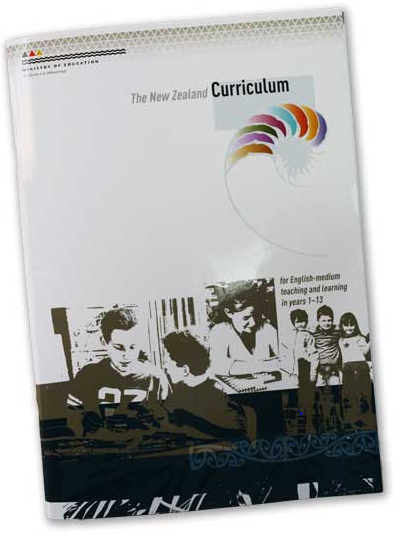
The reflection of the presentation is found in 'front end' of the NZC where 'Effective Pedagogy' is outlined; 


Aroha based much of her foundation of her discussion about what Waihi College presents in our prospectus and website about what is important in education here at school.  

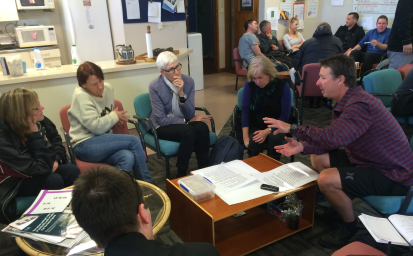
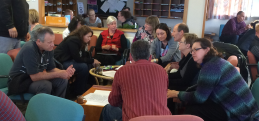
A core part of Aroha's workshops activities 'Coherence at Our School' - where staff divided into smaller groups and work through the shared understanding of how things are done here at Waihi College.  
  • How do we make available the information about our tamariki?  Can we sharpen up our lines of communication?
  • The use of exemplar materials - spelling out the steps through the curriculum.  Our teachers know what "level four" looks like - but do our students? 
  • How can we get the staff to act consistently in a student centered manner?  
  • How do we make explicit use of learning intentions and success criteria?  
  • What are the core learning that needs to be the basis of education here at Waihi College (example of the use of being able to write coherent paragraphs)?  
The latter part of the presentation we were presented with an open ended invitation - "What are the next steps that can be targeted for our community to move towards in the immediate future?"

  • More access to the information (say with a rotated option class) knowing a little bit more about the group before we have them. (Bob's group)  
  • How can we extend success some teachers are having with certain students to be shared success with all teachers? (Aroha's observation)  
  • How can we increase the parental/whanau buy-in to education? (Levonne's group)
  • Exemplars on the walls - students who say "why didn't I get a merit?" after the assessment - this should/could have been presented earlier to empower that student.  (Peter's group) 
  • We could be talking more between groups. (Bridget's group) 
  • Use of the APP's task being a more deliberate method of presenting shared understanding.  (Norm's group).
  • If we can't see it how can the kids?  (Jo's group)
  • How can we improve the collaboration with the feeder primary schools - can this proactively be acted upon? (Sean's group)
  • What about the 'uncontrollable' (e.g. truancy)... can our systems be improved?  How can we make our flagging of issues more ready actionable?  (Carlene's group)
  • Developing of Ako meetings - especially in the start of the year.  (Jay's group).
  • Shared rubrics/exemplars across the learning areas.  (Jay's group).
     
Archway of Teaching Capacity

n.b Aroha's presentation was through an online program called 'Sway' this is a free product available from Office 365. 

This post relates to RTC #7. "Promote a collaborative, inclusive and supportive learning environment."  And ERO's School Evaluation Indicators Domain 4 "Responsive Curriculum, Effective Teaching and Opportunity to Learn - students develop learning to learn capabilities."


Monday, August 31, 2015

Progress and Consistency Tool

Overall Teacher Judgements

The Ministry of Education has invested a great deal of time and money into an online computer program that is designed to help teachers make more informed judgments about what level the students are operating in the curriculum.  They call this program the PaCT which is Progress and Consistency Tool.  (Click here to go to the website)

As part of yesterday's Teacher Only Day programme the Year 7 & 8 teachers (and Junior Maths teachers) were introduced to this tool.  It was pleasing to see teachers become early adopters of this technology.

Some of the benefits of the PaCT system include...
  1. Automatic communication with Kamar - the two administration systems sync together.
  2. The individualised nature of PaCT where each student is individually judged.
  3. The multiple illustrated exemplars (with teacher-student dialogue) make for very clear indications of where in the spectrum students consistently sit.
  4. These illustrations become a good check point for staff to reflect upon the level of the class.
  5. The entire cohort data will be available to better allow for monitoring and planning around year levels.  
One of the comments was that with greater awareness of the PaCT tool that there will be an increased level of consistency around overall teacher judgments between teachers, schools, and different years which can only be beneficial.  

 This post relates to RTC #11. "Analyse and appropriately use assessment information, which has been gathered formally and informally - i. analyse assessment information to identify progress and ongoing learning needs of ākonga." And ERO's School Evaluation Indicators Domain 4 "Responsive Curriculum, Effective Teaching and Opportunity to Learn - Effective Assessment for learning."

Thursday, August 20, 2015

Classroom Expectations

Evolution of Education

When I first began teaching I was *taught* a very traditional way of managing a classroom.  The basic presumptions were...

  1. That getting students to work was the key to learning.
  2. Work looked like silence, lots of writing, solo participation.
  3. That students would actively look to doing minimal work.
  4. Teachers were to pressure students into doing the work.  

The following PowerPoint presentation begins with some photographs which sum up that philosophy on education.  The dog with a biscuit on his nose - this can be done by training that the dog (aka the student) would want to eat straight away (not work in class) and the owner (aka teacher) would have to be in control.  


The other image of an alpha wolf represents the way teachers were modeled to control.  That you would rigidly police the students into obedience.  This was often done through faking aggression - don't smile until Easter on steroids.  


Classroom Expectations from WaihiCollege

The video which I showed echo'd this management style...


Looking at this video what messages were represented?

  • Discipline?  Humiliation?  Inhumanity?
  • Education centered on facts?
  • Education centered on the teacher?
  • Misogyny? 
One of the things that you may have missed in this clip.  This is about the older teacher showing the new teacher 'how it is done'.  

The evidence now is very clear - the best teaching is done in an environment where mutual respect is paramount.  Todd Whitaker puts it very well in his book (click here) What great teachers do differently; “The teacher who sets a positive tone can influence the interactions of everyone in the school” (p. 55)

This post relates to RTC #2. demonstrate commitment to promoting the well-being of all ākonga.  And RTC #7. promote a collaborative, inclusive and supportive learning environment.  And ERO's School Evaluation Indicators Domain 4 Effective Teaching "Students experience an environment in which it is safe to take risks and errors provide opportunities to learn".  

Monday, July 13, 2015

Educating Boys'

Males and NCEA

I began my teaching career in a traditional single sex boys high school.  My initial years were grounded in School Certificate, Six Form Certificate and Bursary - these were systems that I was familiar with (I was a product of them myself).  
Peter Lyons - Otago Daily Times

An opinion piece by Peter Lyons (an economics teacher from St Peter's in Auckland) in the New Zealand Herald (click here) raises the issue of gender inequality in education - specifically in NCEA qualifications.  Whilst acknowledging the pitfalls of making generalised statements Lyon's points out that "NCEA is a standards-based assessment system. Many boys seem to adopt the attitude that meeting the minimum standard will suffice."

I wanted to know how reflective this statement would be for us here at Waihi College.  Do we in fact have results that reflect boys struggling in NCEA compared with the girls (and if so what does that mean for us as an educational institution)?

Here are some of our NCEA results from last year...  Level One 2014 had Girls endorsed with Excellence 6.3% (boys were at 3.3%) Girls endorsed with Merit 46.9% (boys were at 23.3%).  Similar results existed for Level Two. Level Three was more even.  So it would not be out of place to say that girls have twice the rate of excelling in NCEA than the boys last year in NCEA.  

Some of the specific issues Lyon has with NCEA include the lack of competitiveness and that instructional nature of assessments; "Boys are also generally less inclined to read instructions carefully. NCEA assessments are laden with instructions, assessment criteria and much additional reading material that camouflages the actual questions that need to be answered."  This are observations which I tend to agree with.  

So what is it that can be done by teachers here at Waihi College to counter these?  I would strongly suggest that regular review of the progress of students through NCEA (one of the core roles of the senior Pouako) would add to the competitive nature among boys.  We have annual goals around endorsement (L1 3 x Exc + 21 x Mer : L2 5 x Exc + 20 x Mer : L3 3 x Exc + 6 x Mer) - we will need boys to be better represented to gain these rates.  

Opportunities and expectations around internal assessments are key.  Are boys not taking the opportunities for 'sign posting' or re-submissions or resits?  Teachers having real conversations about the high expectations for our boys is key.  Are we pushing our boys and creating that environment of excellence?  In ERO's School Evaluation Indicators Domain 4 : Responsive curriculum, effective teaching and opportunity to learn "teachers and students co-construct realistic and challenging learning goals..." 

This post is related to RTC #1. "Establish and maintain effective professional relationships focused on the learning and well-being of ākonga." And RTC #7. "Promote a collaborative, inclusive and supportive learning environment part ii. foster trust, respect and cooperation with and among ākonga.  And ERO's School Evaluation Indicators Domain 4.