Here is the plan for this week...
Showing posts with label Book Review. Show all posts
Showing posts with label Book Review. Show all posts
Monday, May 9, 2016

Sunday, April 10, 2016
Tuesday, March 29, 2016
Week 8 & 9 Planning Document
FYI Planning
Here is the weekly staff planning document for week eight and nine.
Here is the weekly staff planning document for week eight and nine.
Sunday, October 18, 2015
Book Review
Educating Ruby : What Our Children Really Need to Learn
by Guy Claxton and Bill Lucas.
Guy Claxton and Bill Lucas are two of the worlds most prominent educational theorists. Guy Claxton is best known as the guru behind the 'BLP - Building Learning Power' movement in the United Kingdom (and expanding).
Educating Ruby (2015) is a modern view of the societal ills centered around education. Like many current education material Claxton and Lucas are very interested in the bigger picture of education. Why thinking about the meta idea of learning as opposed to curriculum or pedagogy. Having been familiar with BLP (book review coming shortly) I found much of Educating Ruby to be a companion document.

Whist this book is not specific to New Zealand's educational system (although some acknowledgements to our early childhood systems are made), Educating Ruby is equally valid reading for Kiwi teachers.
A strong case for curriculum review is made by Claxton and Lucas in Educating Ruby where hegemonic thinking about the 'heirarchy' of subjects is raised: “In school, subjects assume importance in inverse proportion to the amount of bodily activity they involve. If you can stay clean and still while you are learning, that is good, so maths and English come out at the top of the pecking order.” (p. 51) This is somewhat reflective of Waihi College's review of students vocational pathways.
Strong criticism is made of the supremacy of testing in education, whilst the authors a making specific reference to the UK system, NCEA easily is reflective. Teachers are under increasing pressures to get student through a myriad of assessments in 'preparation' for life after school. Questions are raised about the 'depth' of modern testing methods. Reference made to the work of Sugata Mitra and revolutionising what learning should be.
This post relates to RTC#8. "Demonstrate in practice their knowledge and understanding of how ākonga learn." and RTC#7. "Promote a collaborative, inclusive and supportive learning environment." And ERO's School Evaluation Indicator - Domain Five : Professional Capability & Collective Capacity.
Wednesday, September 30, 2015
Book Review
Mindsets in the Classroom: Building a Culture of Success and Student Achievement in Schools. by Mary Cay Ricci
 Mindsets in the Classroom is a well written book for school leadership and teachers alike. It address Carol Dweck's (click here for book review) notions of fixed and growth mindsets. Mary works from many angles, student/parent/teacher/administrator. She presents a school wide systematic approach to embedding a growth mindset.
In all honesty I have been working under the fixed mindset for the majority of my career. With teaching of Mathematics I would regularly see the differences in students skill in my subject. As I've aged I can see more that 'skill' is often exposure. Those best at arithmetic most likely have had more exposure. Reading more about growth mindset the more benefit I see it in for a school community.
At it's heart growth mindset is about grit and determination. Seeing the challenge of learning and not shying away. I prefer a world where attitude takes you further than talent.
Mindsets in the Classroom begins by establishing the research on malleability of intelligence, quickly challenging educators to consider their own beliefs around IQ; “The first stop along the path to building a growth mindset culture is to begin to build a school culture that values intellectual growth with a staff who has internalized the belief that intelligence can be cultivated.” (p. 13)
Ricci uses real life examples to illustrate her points. A significant section of Mindsets in the Classroom is written for parents. Having three young ones I found this to be riveting reading and picked up some good tips. “When adults praise what a child ‘is’ such as tall or smart, the child attributes their accomplishment to a fixed trait they were born with. When adults praise actions or tasks that children ‘do’, the children attribute accomplishment with their own effort.” (p. 20)
There is a strong emphasis on quality pedagogy to complement growth mindsets. Specifically Ricci is critical of teaching that doesn't offer differentiation. That one of the core responsibilities of teachers it the ability to recognise the learning needs of the students and provide appropriate learning to those individuals. Tying in well with this was a comprehensive section on formative assessment, how to best use it, manage the data and react to what it says.
I enjoyed this book. I found that Ricci's ideas are well considered and easily communicated. I will use this and Dweck's material as key source for some staff professional development. I would recommend this book to any teacher or parent.
This post relates to RTC#8. "Demonstrate in practice their knowledge and understanding of how ākonga learn." and RTC#7. "Promote a collaborative, inclusive and supportive learning environment."
Sunday, September 27, 2015
Book Review
Mindset : The new psychology of success - How we can learn to fulfill our potential by Carol S. Dweck

Mindset is a book that I have heard constantly being referred to. Written originally in 2006 by Colombia professor Carol Dweck it has since reached to top of many best seller lists.
Mindset is an unusual book because it is at it's heart a psychology book, but it's core message is so clear and logical that it is quite at home in the self help section of a bookstore.
Dweck presents a very simple idea that there are two dominant mindsets that exist in people; fixed and growth. These mindsets boil down to the notion of whether you believe in inherent talent (e.g. fixed I.Q.) or developed skill.
Dweck's team of researchers were investigating the effects of praise on students when it came to challenge. Namely the type of praise (where it be of a talent or of a disposition). They found that children when praised for intelligence or brains would be more likely to quit than children praised for tenacity or determination.
Mindset is an important book for all educators. Schools by there inherent nature are about feedback and praise. Teachers are in a uniquely powerful position to empower (or hinder) the progress of students with our words. Dweck puts it "The view you adopt for yourself profoundly affects the way you lead your life. It can determine whether you become the person you want to be and whether you accomplish the things you value." (p. 6)
Mindsets can form from the smallest of things. There are ample well presented stories (many involving teachers) which Dweck uses well to illustrate the importance of cultivating mindsets. I found chapters on sports stars mindsets to be a powerful section - I recognised the sports stars better than the business illustrations. Mindset is written extremely well for a University Professor, at only 246 pages I finished it of in a day.
I felt before reading this book that I had a very good handle on the psychology of learning. But there were some basic errors I have been making - especially around praising students. For example "telling students they're smart, in the end made them feel dumber and act dumber, but claim they were smarter." (p. 74).
I would definitely recommend Mindset to all teachers from any curriculum area. For senior leaders Mindset has an excellent section illustrating the dangers of having a fixed mindset in management. A very good read indeed.
This post relates to RTC#8. "Demonstrate in practice their knowledge and understanding of how ākonga learn." and RTC#7. "Promote a collaborative, inclusive and supportive learning environment."
Monday, July 13, 2015
Book Review
Changing Our Secondary Schools by Bali Haque

I really enjoyed this educational theory book, especially because this is written by a kiwi, who has worked in the New Zealand system and understands the changes specifically in the New Zealand educational system.
 Bali Haque is a well known figure in the New Zealand educational community being a former principal Pakuranga and Rosehill Colleges, President of the Secondary Principals' Association, deputy chief of NZQA and an executive member of the PPTA. In recent years he has worked in Rarotonga.
In Changing Our Secondary Schools Bali has analysed the major changes to the New Zealand Education system over the last three decades. It is easy to see the level of change our sector has been subjected too. I enjoyed his summaries and gained from seeing these changes from a management/strategic point of view. My experiences have been predominantly as a teacher this book helped me see some of the logic behind the theory.
Bali is highly critical mostly of implementation of the policies rather than the specific policies themselves. Highlighting the compromises built upon compromises resulting in some avoidable problems. He focuses much of his criticism on the divisions (and conflict) that exist in New Zealand secondary schooling systems.
In the second half of the book Bali takes deliberate aim at many sacred cows in the system. He has strong ideas which can be summarised as incendiary. Paying excellent teachers 'excellence units', aiming to remove incompetent (and marginally competent) teachers from the ranks, making all but five weeks of holidays an expectation for teachers to be onsite, raising the entry requirement for teacher training a masters qualification, removing the focus from extra curricular, to name a few.
On the issue of collective professionalism Bali writes "It is important to serious address the problem of incompetent and mediocre teachers... teaching is too important a profession to tolerate free riders and level high flyers unrewarded.".
I would recommend Changing Our Secondary Schools to teachers who are new to NZ (as it gives some excellent background information about how we got here), teachers who have a mind for the politics of schooling, senior management (as much of the change lies with them). It is an easy reading book and one that had me thinking late into the night.
This post relates to RTC #12 - "Engaging with professional literature and reflecting on ones practice".
Tuesday, May 5, 2015
Book Review
David & Goliath : Underdogs, Misfits and the Art of Battling Giants. By Malcolm Gladwell.
 This is the latest in the line of excellent books by Malcolm Gladwell (Outliers and Blink I would highly recommend). David & Goliath is one of the rare books where an international bestseller writes so clearly on educational ideas.
Gladwell's style is very good - he takes complex notions and illustrates them well in real life narrative. He takes you as a reader to Paris in the Impressionist art movement, to the ancient biblical setting of Judea, back into modern settings. Each new story bringing out his ideas of overcoming adversity.
As an educator I was most impressed by chapter four where Gladwell works through an explanation of the science of dyslexia. This complex medical term has grown and grown in educational circles - but remains to most teachers something of a mystery. The beginning pages of this chapter was a concise/clear summary of what is happening inside the head of a young person with dyslexia.
Another great chapter for teachers to read is chapter two where the majority of the material is focused on the best class size (a controversial and political subject). Gladwell takes a scientific approach to calculating what is the best size class for learning. He works well through the balance of work loads, class engagement, teacher one on one time and classroom management. FYI Gladwell concludes that too smaller classes (which are major selling points for private schooling) are not the best. Rather he settles on 24 or 18 as these can be assigned into groups easily. It is interesting to see he's constantly looking at the underdogs so considers greatly those introverted/shy students in classes.
 I related well to the sections devoted to the 'size of the pond'. Here Gladwell contrasts the effects of being the big fish - small pond vs being a big fish - great big pond. For us here at Waihi College (with cohorts around 100 students) has many tangible positives.
I would definitely recommend this book. Teachers that would get additional benefit from reading David & Goliath are career counselors, teachers with dyslexic students, teachers from the STEM (science, technology, engineering and maths classes), and those interested in the big picture around education.
Finally here is a quick YouTube clip of Gladwell discussing his latest book...
This post relates to RTC#8. "Demonstrate in practice their knowledge and understanding of how ākonga learn." and RTC#7. "Promote a collaborative, inclusive and supportive learning environment."

Gladwell's style is very good - he takes complex notions and illustrates them well in real life narrative. He takes you as a reader to Paris in the Impressionist art movement, to the ancient biblical setting of Judea, back into modern settings. Each new story bringing out his ideas of overcoming adversity.
 |
| Malcolm Gladwell |
Another great chapter for teachers to read is chapter two where the majority of the material is focused on the best class size (a controversial and political subject). Gladwell takes a scientific approach to calculating what is the best size class for learning. He works well through the balance of work loads, class engagement, teacher one on one time and classroom management. FYI Gladwell concludes that too smaller classes (which are major selling points for private schooling) are not the best. Rather he settles on 24 or 18 as these can be assigned into groups easily. It is interesting to see he's constantly looking at the underdogs so considers greatly those introverted/shy students in classes.
I related well to the sections devoted to the 'size of the pond'. Here Gladwell contrasts the effects of being the big fish - small pond vs being a big fish - great big pond. For us here at Waihi College (with cohorts around 100 students) has many tangible positives. I would definitely recommend this book. Teachers that would get additional benefit from reading David & Goliath are career counselors, teachers with dyslexic students, teachers from the STEM (science, technology, engineering and maths classes), and those interested in the big picture around education.
Finally here is a quick YouTube clip of Gladwell discussing his latest book...
This post relates to RTC#8. "Demonstrate in practice their knowledge and understanding of how ākonga learn." and RTC#7. "Promote a collaborative, inclusive and supportive learning environment."
Monday, April 27, 2015
Book Review
Changing on the Job : Developing Leaders for a Complex World. By Jennifer Garvey Berger
 This was a most excellent read. Jennifer Garvey Berger is a kiwi educational theorist from the Wellington region. She has written this book about managing change as professionals. Although this book is not specifically about secondary education or teachers it is a valid and engaging read for anyone serious about professional development. I found that in my role of facilitating some of the professional development here at school that Changing on the Job caused me to be very introspective and reconsider many of my assumptions on how teachers progress in their development.
Jennifer uses a pragmatic style of writing where she presents hypothetical situations and exams a series of ways you could potentially approach them. I found that she accurately described the traits I have with problems (i.e. seeking immediate solutions) and works coherently through the subtle distinctions in what constitutes the various 'forms of mind' (I've discovered that I'm a 'self authored' form of mind).
Garvey Berger makes use of some powerful imagery in her writing. If found that her metaphor of growing in skills and knowledge like the rings of a tree as particularly useful.
 "From our earliest days, each of us has been engaged in an ongoing journey to learn and to grow. These two human forces are often connected, but they are not the same. Learning can be about acquiring a new skill or knowledge base. If I master PowerPoint in order to put together a slide show for a client, I have learnt something. I have new information in my head. But have I really grown? From a developmental perspective, real growth requires some quantitative shift, not just in knowledge, but in perspective or way of thinking. Growing is when the form or our understanding changes; we often call this "transformation."... Each moment of our development, then, is a potentially term form of mind that, with the right support, can be more expansive. As we grow, the previous form is overtaken by the new form, leaving traces of less-mature form behind like rings in a tree trunk."
Overall Changing on the Job is a very engaging book with a global appreciation of what it means to develop as a leader. I found that chapters 3 and 4 were the most theoretical (and therefore personally the harder parts to read), but that there were immensely power chapters towards the end - especially 'transformational habits of mind'.
I would recommend this book to teachers who, in a mentoring capacity, have students of leadership potential. I found Changing on the Job made me better aware of the spectrum of leadership and how differently the student leaders may view the world to me. I would also recommend this book to any teacher that is looking at the option of taking position of management.
Here is a YouTube clip which has Jennifer Garvey Berger presenting her own book.
This post relates to RTC#8. "Demonstrate in practice their knowledge and understanding of how ākonga learn." and RTC#7. "Promote a collaborative, inclusive and supportive learning environment."

Jennifer uses a pragmatic style of writing where she presents hypothetical situations and exams a series of ways you could potentially approach them. I found that she accurately described the traits I have with problems (i.e. seeking immediate solutions) and works coherently through the subtle distinctions in what constitutes the various 'forms of mind' (I've discovered that I'm a 'self authored' form of mind).
Garvey Berger makes use of some powerful imagery in her writing. If found that her metaphor of growing in skills and knowledge like the rings of a tree as particularly useful.
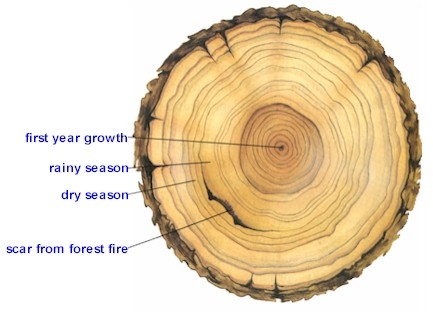 "From our earliest days, each of us has been engaged in an ongoing journey to learn and to grow. These two human forces are often connected, but they are not the same. Learning can be about acquiring a new skill or knowledge base. If I master PowerPoint in order to put together a slide show for a client, I have learnt something. I have new information in my head. But have I really grown? From a developmental perspective, real growth requires some quantitative shift, not just in knowledge, but in perspective or way of thinking. Growing is when the form or our understanding changes; we often call this "transformation."... Each moment of our development, then, is a potentially term form of mind that, with the right support, can be more expansive. As we grow, the previous form is overtaken by the new form, leaving traces of less-mature form behind like rings in a tree trunk."
Overall Changing on the Job is a very engaging book with a global appreciation of what it means to develop as a leader. I found that chapters 3 and 4 were the most theoretical (and therefore personally the harder parts to read), but that there were immensely power chapters towards the end - especially 'transformational habits of mind'.
I would recommend this book to teachers who, in a mentoring capacity, have students of leadership potential. I found Changing on the Job made me better aware of the spectrum of leadership and how differently the student leaders may view the world to me. I would also recommend this book to any teacher that is looking at the option of taking position of management.
Here is a YouTube clip which has Jennifer Garvey Berger presenting her own book.
This post relates to RTC#8. "Demonstrate in practice their knowledge and understanding of how ākonga learn." and RTC#7. "Promote a collaborative, inclusive and supportive learning environment."
Monday, March 23, 2015
Book Review
How Children Succeed : Grit, Curiosity and the Hidden Power of Character. By Paul Tough


This is a book that I was very eager to read. I'm a fan of education around character and believe that schools are charged with more than qualifications. Paul Tough, himself a self confessed 'drop out' has taken the task of comparing intelligence with character. I felt that this book was a good read and focused well upon the hidden curriculum.
I felt myself linked closely to Paul's life experiences, he has a great chapter in there about being a father and looking deeply into the educational experience of children.
Much of How Children Succeed is based upon experience/case examples. All of the ideas Paul presents are illustrated with some real life people and their ability to succeed where they would not expected to be.
There were some very good quotes “The best way for a young person to build character is for him to attempt something where there is a real and serious possibility of failure.” (p. 85) I think that this is something that our modern educational system can be guilty with. We offer much of our assessment in 'low risk' assessments - I've never personally done a standard, I was raised in an examination environment where all the year was measured in a one off test. [my preference is not for a major one off exam].
Another thing for the plus side of How Children Succeed is the chapters he devotes to the study of chess and intelligence and determination.
I would recommend this book for teachers, especially those with children. Tough offers more in the way of observation than solution. I found myself agreeing with much of Paul's points and enjoyed his illustrative writing style.
Here is a nice YouTube clip where Paul is interviewed about his book.
This post relates to RTC #12 - "Engaging with professional literature and reflecting on ones practice and RTC#5
Sunday, March 22, 2015
Latest Staff Books
Educational Reading Books.
Here are some new titles that we've added to our staff catalogue. Please do take the time to have a read of any of these (school holidays are coming up which will give you some time).

I would greatly appreciate it if you can review any of these titles for other staff.
This post relates to RTC #12 - "Engaging with professional literature and reflecting on ones practice and RTC#5 - "Actively contributing to a learning community".
Here are some new titles that we've added to our staff catalogue. Please do take the time to have a read of any of these (school holidays are coming up which will give you some time).
I would greatly appreciate it if you can review any of these titles for other staff.
This post relates to RTC #12 - "Engaging with professional literature and reflecting on ones practice and RTC#5 - "Actively contributing to a learning community".
Thursday, March 19, 2015
Creating Innovators
Book Review
Creating Innovators : The Making of Young People Who Will Change the Word. By Tony Wagner
I found this book a very enjoyable read. I have read another good book by Tony called The Global Achievement Gap which was an educationalist's view of the world around the Global Financial Crisis of 2008.
 The thing that most surprised me was that Creating Innovators is a book that is intrinsically linked to a website (click here for link) with videos that drive the writing within each chapter..
Tony identifies the key set of skills and habits of mind that modern students need to thrive in the world. Those are;
Much of the lament of Tony's comments on the American education system (over emphasis on testing and a highly specified curriculum) are things that New Zealand schools don't face. Our NZC opens up the opportunity for teachers to innovate their learning into wide contexts.
Another wee gem in Creating Innovators is the 'letter to a young innovator' - five pages at the end of the book where Tony writes directly to modern day learners. Here he offers advice to young people about the opportunity and importance of becoming more and more innovative.
I would recommend this book to any teacher interested in the 'big picture' of education. It is an interesting read (one you'll have to do with access to the internet). It was a readable book, one that you can digest over a weekend. If I had any critique it was that it was too intercontinental United States.
This post relates to RTC#8. "Demonstrate in practice their knowledge and understanding of how ākonga learn." and RTC#7. "Promote a collaborative, inclusive and supportive learning environment."
Creating Innovators : The Making of Young People Who Will Change the Word. By Tony Wagner
I found this book a very enjoyable read. I have read another good book by Tony called The Global Achievement Gap which was an educationalist's view of the world around the Global Financial Crisis of 2008.
 The thing that most surprised me was that Creating Innovators is a book that is intrinsically linked to a website (click here for link) with videos that drive the writing within each chapter..
Tony identifies the key set of skills and habits of mind that modern students need to thrive in the world. Those are;
Chapter Five was the most interesting for me as a teacher in a high school. Here Tony works through the conservative nature of education within modern secondary schools. He highlights the traditional nature of education was based upon facts, but that there is an exponential growth in the amount of facts. Primarily he challenges secondary teachers to seek new ways of finding relevance and meaningful connections with their students. Ideally creating within our students the development of passion and purpose in their learning.
- Curiosity,
- Collaboration,
- Associated and Integrated Thinking (aka adaptability), and,
- Taking action (experimenting).
Much of the lament of Tony's comments on the American education system (over emphasis on testing and a highly specified curriculum) are things that New Zealand schools don't face. Our NZC opens up the opportunity for teachers to innovate their learning into wide contexts.
Another wee gem in Creating Innovators is the 'letter to a young innovator' - five pages at the end of the book where Tony writes directly to modern day learners. Here he offers advice to young people about the opportunity and importance of becoming more and more innovative.
I would recommend this book to any teacher interested in the 'big picture' of education. It is an interesting read (one you'll have to do with access to the internet). It was a readable book, one that you can digest over a weekend. If I had any critique it was that it was too intercontinental United States.
This post relates to RTC#8. "Demonstrate in practice their knowledge and understanding of how ākonga learn." and RTC#7. "Promote a collaborative, inclusive and supportive learning environment."
Sunday, September 14, 2014
Book Review
Professional Capital Transforming Teaching in Every School
by Andy Hargreaves and Michael Fullan
 This was a book that I picked because of the authors. Micheal Fullan is a sound educationalist who wrote "Putting the faces on the data" (a book that I share strong agreement with). And Andy Hargreaves is an Englishman, teacher come professor and now lives in Boston in the US.
This book really is an attempt to write a utopian view point of how education should be in schools. Fullan and Hargreaves attempt to write the ingredients they believe with revolutionise schooling - they make a compelling argument.
I found that whilst the primary target audience for this book is those in leadership Professional Capital has a great deal in there for all teachers. I found myself taking notes and quotes from the book and once I'd finished these were over four pages long.
Here at Waihi College with the appointment of our schools 'Learning Leaders' I found that Professional Capital greatly helped me in developing my own understanding of where management can best help transform the culture.
One of the best quotes from Hargreaves and Fullan which really sums up the overarching theme of Professional Capital is (emphasis is mine)...
I would definitely recommend this book to other educators. It was not a huge read (about 160 pages then referencing). It was read more as a persuasive and passionate argument than a thesis by academia. Finally for those that are unsure if they'd be interested in reading this book here is the cliff note video version from the authors themselves.
This post is in relation to RTC #4. "demonstrate commitment to ongoing professional learning and development of personal professional practice." And RTC # 8. "demonstrate in practice their knowledge and understanding of how ākonga learn."
by Andy Hargreaves and Michael Fullan
This was a book that I picked because of the authors. Micheal Fullan is a sound educationalist who wrote "Putting the faces on the data" (a book that I share strong agreement with). And Andy Hargreaves is an Englishman, teacher come professor and now lives in Boston in the US. This book really is an attempt to write a utopian view point of how education should be in schools. Fullan and Hargreaves attempt to write the ingredients they believe with revolutionise schooling - they make a compelling argument.
I found that whilst the primary target audience for this book is those in leadership Professional Capital has a great deal in there for all teachers. I found myself taking notes and quotes from the book and once I'd finished these were over four pages long.
Here at Waihi College with the appointment of our schools 'Learning Leaders' I found that Professional Capital greatly helped me in developing my own understanding of where management can best help transform the culture.
One of the best quotes from Hargreaves and Fullan which really sums up the overarching theme of Professional Capital is (emphasis is mine)...
"The secret to higher efficacy and to keeping teachers is not just making sure that teacher get individual support, here or there, but that they get to work in well-led, dynamic, strongly supported schools, where there is a belief in student success, a knowledge of how to bring it about, and a willingness and eagerness for everyone on the staff to keep learning and improving - inexperienced and experienced alike. It is, in other words, the culture of the school that makes the difference. If you get this right, if you change the teacher by changing the entire school and profession, then no matter what challenges teachers have to face, a big payback will come through just a few years down the line." (Hargreaves and Fullan, 2014, p. 70)
I would definitely recommend this book to other educators. It was not a huge read (about 160 pages then referencing). It was read more as a persuasive and passionate argument than a thesis by academia. Finally for those that are unsure if they'd be interested in reading this book here is the cliff note video version from the authors themselves.
This post is in relation to RTC #4. "demonstrate commitment to ongoing professional learning and development of personal professional practice." And RTC # 8. "demonstrate in practice their knowledge and understanding of how ākonga learn."
Tuesday, September 2, 2014
Formative Assessment
Inside The Black Box
 With the departure of ERO this term there has been a highlight of the need for a common level of practice in the use of our data. This post is particularly focussed on the use of formative assessment data to improve our practice, planning, reporting and general knowledge of our learning progress.
It was recommended to us to use as one of the core academic sources an article by Paul Black and Dylan Wiliam called Inside the Black Box : Raising Standards Through Classroom Assessment [click on the title to link to an online copy]. This article is somewhat dated (circa 1998) but was a quick read (only sixteen pages) and written with the teacher in mind.
I believed that my own practice around formative assessment is/was very sound. It has morfed slightly over my years as a teacher of Mathematics - but primarily has involved the same strategy. Specifically that looked like beginning lessons with some "do now" questions (maths material that focusses on the work covered in recent lessons or earlier this year). I have detailed roll book (see attached document).

My formative assessment data would be the scores out of 10. These I used as a means of gauging whether the class are 'getting it'. Inside the Black Box really challenged my assumptions and drilled down into the quality of what my formative practice has actually been.
Here are some of the quotes which if found to be most profound...
And they challenge with a self assessment questions of;

Here are the questions that the ERO team were asking staff and management...
For Staff
This material relates to RTC #
11. analyse and appropriately use assessment information, which has been gathered formally and informally - and - RTC # 8. demonstrate in practice their knowledge and understanding of how ākonga learn
 With the departure of ERO this term there has been a highlight of the need for a common level of practice in the use of our data. This post is particularly focussed on the use of formative assessment data to improve our practice, planning, reporting and general knowledge of our learning progress.
It was recommended to us to use as one of the core academic sources an article by Paul Black and Dylan Wiliam called Inside the Black Box : Raising Standards Through Classroom Assessment [click on the title to link to an online copy]. This article is somewhat dated (circa 1998) but was a quick read (only sixteen pages) and written with the teacher in mind.
I believed that my own practice around formative assessment is/was very sound. It has morfed slightly over my years as a teacher of Mathematics - but primarily has involved the same strategy. Specifically that looked like beginning lessons with some "do now" questions (maths material that focusses on the work covered in recent lessons or earlier this year). I have detailed roll book (see attached document).
My formative assessment data would be the scores out of 10. These I used as a means of gauging whether the class are 'getting it'. Inside the Black Box really challenged my assumptions and drilled down into the quality of what my formative practice has actually been.
Here are some of the quotes which if found to be most profound...
"Improved formative assessment helps low achievers more than other students and so reduces the range of achieved while raising achievement overall." (p. 4)A strong statement on the importance of a concentration on the use of data.
"Pupils who come to see themselves as unable to learn usually cease to take school seriously." (p. 4).With honest personal reflection I can see this trait is a valid observable factor in with 9BK - students that are giving up on Maths as they see themselves unable to do it. Making this one of my priority goals as an teachers.
"Teachers are often able to predict pupils' results on external tests because their own tests imitate them, but at the same time teachers know too little about their pupils' learning needs." (p. 5)This is notable in my own formative assessment - I know who's on track for the summative assessment but I'm not specifically able to pin point exactly where they're deficient (and therefore I'm lacking in my practice with feedback/feedforward).
"Feedback to any pupil should be about the particular qualities of his or her work, with advice on what he or she can do to improve, and should avoid comparisons with other pupils." (p. 7)Black and Wiliam highlight a particular shortcoming of my own use of formative data;
"It is essential to ensure the quality of feedback. Research studies have shown that, if pupils are given only marks or grades, they do not benefit from feedback." (p. 9)
And they challenge with a self assessment questions of;
"Do I really know enough about the understanding of my pupils to be able to help each of them?" (p. 10)

Here are the questions that the ERO team were asking staff and management...
For Staff
- Where is your formative data? Can I see it?
- How do you use your formative data to plan?
- Can I see the notes you've made for yourself that you use to follow up on?
- Where are your reflections on your students?
- What tools are you expecting your staff to use to gather formative data?
- What do you provide to staff as guidelines and expectations you have for your staff?
- What are the your expectations on recording formative observations?
This material relates to RTC #
11. analyse and appropriately use assessment information, which has been gathered formally and informally - and - RTC # 8. demonstrate in practice their knowledge and understanding of how ākonga learn
Thursday, August 14, 2014
Book Review - Todd Whitaker
17 Things That Matter Most by Todd Whitaker
Review by Justin
 I love to read. I especially like fantasy novels by authors
that 'take me into another world'. A
favourite annual Christmas holiday event for me is reading a book through no interruptions. Very few times do I find an educational 'how
to' book that fits into that category.
However Todd Whitakers What Great
Teachers Do Differently: 17 things that matter most does. It is a short book (around 120 pages) and was
a one day read.
Nicola, my wife, is
also a teacher. I found that I popped my
head up often reading her an exert and saying "listen to this, this is so
true…".
Whitaker style is somewhat
formulaic, not so much as a recipe book, but delivering chapters each with a
pearl of educational wisdom. The points
are made with clear illustration - narratives that concrete in the idea. It is clear to me that Whitaker was a great
school leader. He offers insight into
typical school life and had me remembering those teachers I had when I was at
school.
One of the things
that I found refreshing is that Whitaker constantly speaks of 'greatness' in
teaching as a destination - something to aspire/aim towards. I found that whilst reading I was constantly
checking off in my head my habits as a classroom teacher.
This was a book that
after I finished I found myself sweeping back into. It was so sound educationally and written in
such an easily digestible manner that I've gone back through and collected my
favourite quotes and decided to make a wall display that other teachers may
discover some useful ideas.
I would definitely
recommend any teacher to read this book.
It was a light read and one that you won't have to slog through.
Tuesday, June 17, 2014
Know Thy Impact

Visible Learning For Teachers by
John Hattie
Review by Justin
John Hattie is a person that I admire. He would be the most globally recognised kiwi
born educational theorist around. Many
teachers that have come through Auckland University will most likely know of
Hattie.
The most powerful thing about Hattie's book is
that it is not a single educational idea that John has come up with and
researched. Rather Hattie decided to
take as much educational research as he could find (over 800 separate research
projects over 15 years involving over 240 million students) and do some meta
analysis.
Hattie formulated at means of quantifying the
'effect' of different factors of education.
That is he's examined the positive (and negative) influences various
teaching decisions have had on learning.
For example he quantified that
good feedback is four times as effective in improving learning as finding
secluded place for study.
Hattie begins by pointing out that in his time
dealing with hundreds of schools and thousands of teachers that most of us are
doing 'good' things. But he wanted to be
able to see the effect of what we do and work out what are the 'best' things we
could be doing.
I found that this book was very good for thinking
about what I'm doing in the classroom as a teacher. It made me rethink my practice, and deeply
consider the impact I'm having on learning.
What's more I seriously began to think about expanding my practice and
trying new things to become a better teacher.
The downside of this book is that Hattie is
ultimately an academic. The reading and
theory can get fairly heavy (and this is the easier 'how to' version for
teachers). I found that some of the
chapters merged into one. The last 80
pages are all appendices of sorts.
I would recommend that all teachers read the
intro and conclusion as Hattie really lays down the challenge of improving
learning at the feet of teachers. He
presents a persuasive argument and sets about trying to expand our horizons in
education.
Ultimately this is great book for those staff
wanting answers to the question - How can I maximise learning in my classroom?
This was one of the youtube clips that led me to this book by Hattie...
This was one of the youtube clips that led me to this book by Hattie...
Subscribe to:
Posts (Atom)