Showing posts with label SEI.D5 Professional Capability & Collective Capacity. Show all posts

Monday, May 9, 2016

Sabbatical Information


Teacher Study Awards and Sabbaticals
Recently the Ministry has opened applications for teachers to apply for an opportunity to take a sabbatical break (or undertake a course of study).  

These were part of recent collective bargaining gains and represent a tremendous opportunity for teachers to reflect and rejuvenate.  Applications for the secondary awards close on the 7th June (day after Queen's birthday Monday).  

The two full pay categories that staff can apply for are;

1.  One term sabbatical - taken in a negotiated time/term in 2016.  These are linked in part to teachers taking an opportunity to professionally develop (visiting schools or researching).  Nationally there are 50 of these available.  
2.  Study award - these can be either part-time or full time for a year.  Nationally there are 75 of these available.  

Further information and applications forms are available online at www.teachnz.govt.nz

This post is related to RTC #4. "4. demonstrate commitment to ongoing professional learning and development of personal professional practice".  And ERO's School Evaluation Indicators Domain 5 "Building professional capacity." 

Tuesday, February 16, 2016

Week Three Planning


2016 Term One Week Three Itinerary
Week B.   
59 days until the end of the term.  That’s 46 school days.  
Monday 15/2
Day Six.  Staff Briefing (am).  Farewell to Karen (pm).  Board of Trustees Meeting (pm)
Drinks and nibbles in the pm.  
Tuesday 16/2
Day Seven.  Maths and Social Science Meetings (am).  SLT Meeting (period two).  Year 9 Planning Meeting (pm).  NCEA Information Evening (pm)

Wednesday 17/2
Day Eight.  Staff Briefing (am).  Year Seven Camp at Dickies Flat (departs at 9am from the bus bay).  First Wednesday XPLORE sessions.  Year 7 & 8 Planning Meeting (pm)
Student Leaders on camp today.
Thursday 18/2
Day Nine.  Year Eight Teachers with Dean (am).  Year Seven Camp.  
House Leaders on camp today.
Friday 19/2
Day Nine.  Year Seven Camp returns today (due back at 2:30pm).  First XPLORE Friday programme.  

Things that can be done this week…
  • Update roll details to Sue.  Who are the students that haven’t returned?  Are there any incorrect addresses/phone numbers/ emails?
  • Academic Calendars – these should now all be in.  
  • First contact home.  Best practice is to make contact home with your classes – easy way is to use the kamar ‘letters’ section (if the emails are up to date then no cost.  Good to; introduce yourself, highlight the goals ahead for the year, offer your contact details (email) to open communication lines.
  • Setting up the kamar Markbook and ‘ticking’ the students into their standards (senior NCEA classes).  This way students will be able to see how many credits they have available this year.  

http://ecx.images-amazon.com/images/I/51W5x1yYrlL._SX329_BO1,204,203,200_.jpg


Food For Thought (linked to RTC #8. “Demonstrate in practice their knowledge and understanding of how ākonga learn”)…
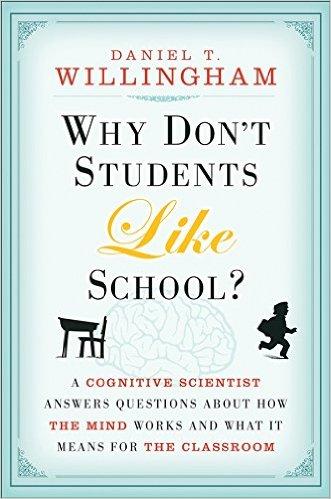
“Contrary to popular belief, the brain is not designed for thinking.  It’s designed to save you from having to think, because the brain is actually not very good at thinking.  Thinking is slow and unreliable.  Nevertheless, people enjoy mental work if it is successful.  People like to solve problems, but not to work on unsolvable problems.  If school work is always just a bit too difficult for a student, it should be no surprise that she doesn’t like school much.”  Daniel T Willingham (2009)

n.b. Book available for staff to read.


The Five Best Classroom Managament Tips – Edutopia Website...

  1. Use a normal, natural voice,
  2. Speak only when the students are quiet and ready,
  3. Use hand and other non verbal communication,
  4. Address behaviour issues quickly and wisely,
  5. Always have a well designed and engaging lesson.
Rebecca Alber Edutopia

On The Horizon…
Next Week we have
  • Endorsement Celebration Night (Tuesday pm)
  • Year 9 – 13 Swimming Sports (Wednesday)
  • School Triathlon (Friday)
This post relates to RTC#8. "Demonstrate in practice their knowledge and understanding of how ākonga learn."  And ERO's School Evaluation Indicator - Domain Five : Professional Capability & Collective Capacity.

Sunday, October 18, 2015

Book Review

Educating Ruby : What Our Children Really Need to Learn
by Guy Claxton and Bill Lucas.  

Guy Claxton and Bill Lucas are two of the worlds most prominent educational theorists.  Guy Claxton is best known as the guru behind the 'BLP - Building Learning Power' movement in the United Kingdom (and expanding).  

Educating Ruby (2015) is a modern view of the societal ills centered around education.  Like many current education material Claxton and Lucas are very interested in the bigger picture of education.  Why thinking about the meta idea of learning as opposed to curriculum or pedagogy.  Having been familiar with BLP (book review coming shortly) I found much of Educating Ruby to be a companion document.  

Whist this book is not specific to New Zealand's educational system (although some acknowledgements to our early childhood systems are made), Educating Ruby is equally valid reading for Kiwi teachers.  

A strong case for curriculum review is made by Claxton and Lucas in Educating Ruby where hegemonic thinking about the 'heirarchy' of subjects is raised:  “In school, subjects assume importance in inverse proportion to the amount of bodily activity they involve.  If you can stay clean and still while you are learning, that is good, so maths and English come out at the top of the pecking order.” (p. 51)  This is somewhat reflective of Waihi College's review of students vocational pathways.  

Strong criticism is made of the supremacy of testing in education, whilst the authors a making specific reference to the UK system, NCEA easily is reflective.    Teachers are under increasing pressures to get student through a myriad of assessments in 'preparation' for life after school.  Questions are raised about the 'depth' of modern testing methods.  Reference made to the work of Sugata Mitra and revolutionising what learning should be.  

This post relates to RTC#8. "Demonstrate in practice their knowledge and understanding of how ākonga learn." and RTC#7. "Promote a collaborative, inclusive and supportive learning environment." And ERO's School Evaluation Indicator - Domain Five : Professional Capability & Collective Capacity.

Thursday, August 20, 2015

Know Thy Impact

As a part of a series of workshops on Visible Learning Plus (the supplementary material for John Hattie's seminal work).  This is the presentation that was made to staff in our afternoon meeting.  

The purpose here is to form a collective understanding of the shared practice here at Waihi College around use of assessment information.  

Being a teacher who uses quality data to inform our practice is a vital component of modern teaching.  But there is a genuine plethora of data available to staff and this can create issues around sifting through this information.  

Here is the powerpoint that was presented.  The key points are...


  1. Teachers should be responsive to the students needs. 
  2. We should be self reflective on our practice (are we making the difference - having an impact).
  3. There are a variety of types of assessment - each with their own purpose.  We should be using the full gambit to inform ourselves.
  4. This ties very well into 'Teaching as Inquiry' - which is a core component of our appraisal system and the Registered Teacher Criteria.  


Know thy impact 10th august 2015 from WaihiCollege


Here is a copy of the video that was presented. 

This post relates to RTC #6  "Conceptualise, plan and implement an appropriate learning programme." And RTC #8. "Demonstrate in practice their knowledge and understanding of how ākonga learn- i) enable ākonga to make connections between their prior experiences and learning and their current learning activities & iii) encourage ākonga to take responsibility for their own learning and behaviour."And ERO's School Evaluation Indicators Domain 4. "Assessment activities are inclusive, authentic and fit-for- purpose, providing relevant and meaningful evidence to evaluate the student's achievement and progress." 

Monday, July 13, 2015

Book Review

Changing Our Secondary Schools by Bali Haque

I really enjoyed this educational theory book, especially because this is written by a kiwi, who has worked in the New Zealand system and understands the changes specifically in the New Zealand educational system.  

Bali Haque is a well known figure in the New Zealand educational community being a former principal Pakuranga and Rosehill Colleges, President of the Secondary Principals' Association, deputy chief of NZQA and an executive member of the PPTA.  In recent years he has worked in Rarotonga.  

In Changing Our Secondary Schools Bali has analysed the major changes to the New Zealand Education system over the last three decades.  It is easy to see the level of change our sector has been subjected too.  I enjoyed his summaries and gained from seeing these changes from a management/strategic point of view.  My experiences have been predominantly as a teacher this book helped me see some of the logic behind the theory.  


Bali is highly critical mostly of implementation of the policies rather than the specific policies themselves.  Highlighting the compromises built upon compromises resulting in some avoidable problems.  He focuses much of his criticism on the divisions (and conflict) that exist in New Zealand secondary schooling systems.  

In the second half of the book Bali takes deliberate aim at many sacred cows in the system.  He has strong ideas which can be summarised as incendiary.  Paying excellent teachers 'excellence units', aiming to remove incompetent (and marginally competent) teachers from the ranks, making all but five weeks of holidays an expectation for teachers to be onsite, raising the entry requirement for teacher training a masters qualification, removing the focus from extra curricular, to name a few.  

On the issue of collective professionalism Bali writes "It is important to serious address the problem of incompetent and mediocre teachers... teaching is too important a profession to tolerate free riders and level high flyers unrewarded.".  

I would recommend Changing Our Secondary Schools to teachers who are new to NZ (as it gives some excellent background information about how we got here), teachers who have a mind for the politics of schooling, senior management (as much of the change lies with them).  It is an easy reading book and one that had me thinking late into the night.  

This post relates to RTC #12 - "Engaging with professional literature and reflecting on ones practice".


Thursday, June 25, 2015

ERO School Evaluation Indicators (Part I)

Effective Practice At Waihi College

The Education Review Office have recently published a trial document called "School Evaluation Indicators: Effective Practice for Improvement and Learner Success".  As the name suggests this is the office's concise guide to what things they want to see happening in our school to produce effective results.  

The guide has an express purpose of providing a "common language for the interaction and dialogue between a school and ERO about development since the last review."  These are effectively the a-b-c's of effective management and running of a NZ school.  This is the first of two publications (the second companion resource is due out in September this year) that schools can use to confirm their progression and development.  

A common observation I've been able to make in my time in teaching is that when ERO announce their dates for review schools are ready (they had in their last review an indication of how many years until the next review).  At Waihi College our 2014 report indicated that three years would be the time for the next review.  In my experience teachers sharpen up their paperwork and a generally geared up for a review, but there is always an unknown element.  Teachers would say "what wheelbarrow will ERO come pushing this time around?" - that there are things that the review team would 'spring' on schools.  The School Evaluation Indicators  is a document which will take away any surprise element for an ERO visit - it effectively spells out, in great detail, what things they'll be be asking.  

This document is an easily digestible 42 pages which begins in theory.  They base their indicators on several things;  25 years of reviews, modern education research, the NZ Curriculum document, legislation, National Administration Guidelines (NAG's), best evidence synthesis, OECD reports and input from Helen Timperley and Viviane Robinson.  Personally I feel comfortable with the indicators themselves, and feel that they're grounded in sound educational theory.  

I've ordered several extra copies for staff (three for the Learning Leaders), there is one available in Alistair's office and one from mine.  

I've been able to link blog posts to the Registered Teacher Criteria, I will from here on attempt to link (where appropriate) future posts to the appropriate School Evaluation Indicators.  

This post relates to RTC #5. show leadership that contributes to effective teaching and learning
and School Evaluation Indicator - Domain Two : Leadership conditions for equity and excellence and Domain Five : Professional Capability & Collective Capacity.