Showing posts with label RTC4. Show all posts

Thursday, August 20, 2015

NASDAP Conference 2015

Thoughts from Conference


I had been looking forward to this year's Deputy Principal's annual conference.  The theme for this year was 'Disobedience - Jump out of the safe zone'.  The idea being that we should be avoiding getting comfortable in our roles and how our schools sit in education.

The conference was extremely well attended with approximately 350 senior managers from around the country.  The bi-annual conference is a nationwide event covering all the regional areas.  This year was held at Skycity.  

During this conference there was a consistent theme about questioning the perceived limitations of schooling, curriculum and traditional assumptions around education.  This was, naturally, a theme eagerly grabbed by our key note speakers.

I very much enjoyed the speech by Mai Chen who presented an excellent summary of education from the perspective of a parent.  Her story of immigration to New Zealand as a six year old and inevitable rise in Law whilst inspirational was grounded in the nitty gritty of life. 

Mai presented her notion of 'disobedience' as deliberately avoiding getting too comfortable with life.  That when we're overtly familiar with our surroundings and systems that we should "choose which tiger to throw a stone at".  

Nathan Makaere Wallis was another keynote speaker who I found to be excellent.  I have already posted a entry on his ideas (click here).  For me Nathan's core message was about getting young people to cognitively process their ideas/actions/words prior to decisions.  He illustrated this well by describing sitting with a young person and going through the 'game' of "what would you do if insert idea happened?"  The notion being that rehearsal.  [Nathan is coming to speak at the college on the 22nd of next month].  
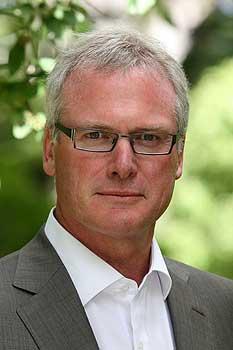
  
The third keynote address I enjoyed greatly was by Steve Maharey (former Education Minister and current Vice-Chancellor of Massey University).  He presented a very good synopsis of what are the key characteristics of those students who will thrive in the future (critical thinking, self management, collaboration, innovation etc).  

This post relates to RTC #4. "Demonstrate commitment to ongoing professional learning and development of personal professional practice - ii. participate responsively in professional learning opportunities within the learning community." And ERO's School Evaluation Indicators Domain 2. "Leadership promotes and participates in a coherent approach to professional learning and practice."

Monday, May 4, 2015

Secondary Teacher Study Awards

The Annual Study Awards


One of the key parts to the 'Vision' of the New Zealand Curriculum document is that our young people are "Lifelong learners" that they'll be "active seekers, users, and creators of knowledge".  This same challenge sits will us as teachers.

I have always thought that one of the very positive parts of working in the education sector is the opportunities we have in furthering our learning.  Every year the Ministry of Education (TeachNZ) offers three different types of study awards.  From now until the 8th of June applications are invited from teachers at NZ schools to consider taking on some individual study.  

The three study awards are...

  1. 75 Secondary Teachers' Study Award - this is study leave opportunity to study a qualification, undertake research, or obtain practical knowledge in an area related to your subject.
  2. 40 Sabbaticals - 10 weeks of full paid leave.  To be eligible you need to have 20 years teaching experience in NZ (including the last seven years), and intend on returning to teaching.  
  3. 100 Study Support Grants - these are for one year and provide cover for one class (0.16 FTTE) to study an area related to education/subject.  There is also $500 contribution to course costs.  
If you are considering applying for one of these three study awards you can find more information at the following web address (click here).

Karen Bryant was able to access one of these study grants to complete her recent study.  Speaking with Karen she is very grateful for that opportunity and would recommend this to those considering the option.  

This post relates to RTC #4. demonstrate commitment to ongoing professional learning and development of personal professional practice - iii. initiate learning opportunities to advance personal professional knowledge and skills. 

Sunday, March 1, 2015

Professional Learning Groups

Small Group Professional Learning

Here is the material that I presented to staff about PLG's.

Ideally the groups should be small enough to be personable.  Big enough to generate their own momentum.


This post relates to RTC#4. demonstrate commitment to ongoing professional learning and development of personal professional practice and RTC #5. show leadership that contributes to effective teaching and learning  i. actively contribute to the professional learning community 


Wednesday, November 19, 2014

Teachers Collective Views Quality Lessons at Waihi College

Quality Delivery of Lessons
It was great to see the consistency of ideas across our collective staff.  This was evidenced by the common themes on the posters we created in our morning pd this term on the 22nd October (see this link to that pd).

The idea of a shared understanding of quality practice is a vital part of a modern learning environment.  

Here is a summary document of all our groups brainstorming...


Most groups identified key themes that;
Bring quality feedback (and feed forward) to the learning experience.  That is to enable the student to clearly understand where they are at and where they can get to in their development across all curriculum areas.  
Similarly all groups identified the ingredient of classroom management.  That students need that safe structured environment to learn.  Some groups drilled down in to how to create these environments.  None of the groups were looking at overtly strict (well none identified that).  Rather there was clear indications of ways of achieving this.

I'm hoping that these ideas are ones that we can collectively build upon over the coming professional development sessions and that this activity will stimulate a greater interest in the ways that teachers are approaching these ideas.  

This post is related to RTC#1. establish and maintain effective professional relationships focused on the learning and well-being of ākonga & RTC#  4. demonstrate commitment to ongoing professional learning and development of personal professional practice

Sunday, September 14, 2014

Book Review

Professional Capital Transforming Teaching in Every School
by Andy Hargreaves and Michael Fullan

This was a book that I picked because of the authors.  Micheal Fullan is a sound educationalist who wrote "Putting the faces on the data" (a book that I share strong agreement with).  And Andy Hargreaves is an Englishman, teacher come professor and now lives in Boston in the US. 

This book really is an attempt to write a utopian view point of how education should be in schools.  Fullan and Hargreaves attempt to write the ingredients they believe with revolutionise schooling - they make a compelling argument.

I found that whilst the primary target audience for this book is those in leadership Professional Capital has a great deal in there for all teachers.  I found myself taking notes and quotes from the book and once I'd finished these were over four pages long. 

Here at Waihi College with the appointment of our schools 'Learning Leaders' I found that Professional Capital greatly helped me in developing my own understanding of where management can best help transform the culture. 

One of the best quotes from Hargreaves and Fullan which really sums up the overarching theme of Professional Capital is (emphasis is mine)...

 
"The secret to higher efficacy and to keeping teachers is not just making sure that teacher get individual support, here or there, but that they get to work in well-led, dynamic, strongly supported schools, where there is a belief in student success, a knowledge of how to bring it about, and a willingness and eagerness for everyone on the staff to keep learning and improving - inexperienced and experienced alike.  It is, in other words, the culture of the school that makes the difference.  If you get this right, if you change the teacher by changing the entire school and profession, then no matter what challenges teachers have to face, a big payback will come through just a few years down the line." (Hargreaves and Fullan, 2014, p. 70) 

I would definitely recommend this book to other educators.  It was not a huge read (about 160 pages then referencing).  It was read more as a persuasive and passionate argument than a thesis by academia.  Finally for those that are unsure if they'd be interested in reading this book here is the cliff note video version from the authors themselves. 


This post is in relation to RTC #4. "demonstrate commitment to ongoing professional learning and development of personal professional practice."  And RTC # 8. "demonstrate in practice their knowledge and understanding of how ākonga learn."