FYI Planning
Here is the weekly staff planning document for week ten...
Showing posts with label RTC8. Show all posts
Showing posts with label RTC8. Show all posts
Sunday, April 10, 2016

Tuesday, March 29, 2016
Week 8 & 9 Planning Document
FYI Planning
Here is the weekly staff planning document for week eight and nine.
Here is the weekly staff planning document for week eight and nine.
Tuesday, February 16, 2016
Week Three Planning
2016 Term One Week Three Itinerary
Week B.
59 days until the end of the term. That’s 46 school days.

Monday 15/2
|
Day Six. Staff Briefing (am). Farewell to Karen (pm). Board of Trustees Meeting (pm)
|
Drinks and nibbles in the pm.
|
Tuesday 16/2
|
Day Seven. Maths and Social Science Meetings (am). SLT Meeting (period two). Year 9 Planning Meeting (pm). NCEA Information Evening (pm)
| |
Wednesday 17/2
|
Day Eight. Staff Briefing (am). Year Seven Camp at Dickies Flat (departs at 9am from the bus bay). First Wednesday XPLORE sessions. Year 7 & 8 Planning Meeting (pm)
|
Student Leaders on camp today.
|
Thursday 18/2
|
Day Nine. Year Eight Teachers with Dean (am). Year Seven Camp.
|
House Leaders on camp today.
|
Friday 19/2
|
Day Nine. Year Seven Camp returns today (due back at 2:30pm). First XPLORE Friday programme.
|
Things that can be done this week…
- Update roll details to Sue. Who are the students that haven’t returned? Are there any incorrect addresses/phone numbers/ emails?
- Academic Calendars – these should now all be in.
- First contact home. Best practice is to make contact home with your classes – easy way is to use the kamar ‘letters’ section (if the emails are up to date then no cost. Good to; introduce yourself, highlight the goals ahead for the year, offer your contact details (email) to open communication lines.
- Setting up the kamar Markbook and ‘ticking’ the students into their standards (senior NCEA classes). This way students will be able to see how many credits they have available this year.
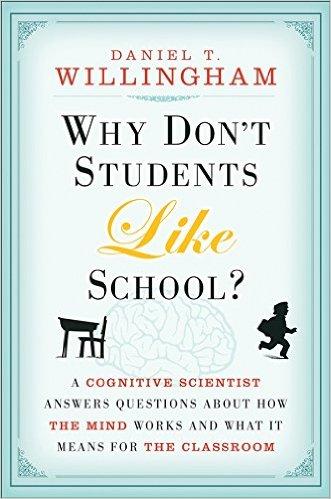
Food For Thought (linked to RTC #8. “Demonstrate in practice their knowledge and understanding of how ākonga learn”)…
“Contrary to popular belief, the brain is not designed for thinking. It’s designed to save you from having to think, because the brain is actually not very good at thinking. Thinking is slow and unreliable. Nevertheless, people enjoy mental work if it is successful. People like to solve problems, but not to work on unsolvable problems. If school work is always just a bit too difficult for a student, it should be no surprise that she doesn’t like school much.” Daniel T Willingham (2009)
n.b. Book available for staff to read.
The Five Best Classroom Managament Tips – Edutopia Website...
- Use a normal, natural voice,
- Speak only when the students are quiet and ready,
- Use hand and other non verbal communication,
- Address behaviour issues quickly and wisely,
- Always have a well designed and engaging lesson.
Rebecca Alber Edutopia
On The Horizon…
Next Week we have
|
This post relates to RTC#8. "Demonstrate in practice their knowledge and understanding of how ākonga learn." And ERO's School Evaluation Indicator - Domain Five : Professional Capability & Collective Capacity.
Sunday, October 18, 2015
Book Review
Educating Ruby : What Our Children Really Need to Learn
by Guy Claxton and Bill Lucas.
Guy Claxton and Bill Lucas are two of the worlds most prominent educational theorists. Guy Claxton is best known as the guru behind the 'BLP - Building Learning Power' movement in the United Kingdom (and expanding).
Educating Ruby (2015) is a modern view of the societal ills centered around education. Like many current education material Claxton and Lucas are very interested in the bigger picture of education. Why thinking about the meta idea of learning as opposed to curriculum or pedagogy. Having been familiar with BLP (book review coming shortly) I found much of Educating Ruby to be a companion document.

Whist this book is not specific to New Zealand's educational system (although some acknowledgements to our early childhood systems are made), Educating Ruby is equally valid reading for Kiwi teachers.
A strong case for curriculum review is made by Claxton and Lucas in Educating Ruby where hegemonic thinking about the 'heirarchy' of subjects is raised: “In school, subjects assume importance in inverse proportion to the amount of bodily activity they involve. If you can stay clean and still while you are learning, that is good, so maths and English come out at the top of the pecking order.” (p. 51) This is somewhat reflective of Waihi College's review of students vocational pathways.
Strong criticism is made of the supremacy of testing in education, whilst the authors a making specific reference to the UK system, NCEA easily is reflective. Teachers are under increasing pressures to get student through a myriad of assessments in 'preparation' for life after school. Questions are raised about the 'depth' of modern testing methods. Reference made to the work of Sugata Mitra and revolutionising what learning should be.
This post relates to RTC#8. "Demonstrate in practice their knowledge and understanding of how ākonga learn." and RTC#7. "Promote a collaborative, inclusive and supportive learning environment." And ERO's School Evaluation Indicator - Domain Five : Professional Capability & Collective Capacity.
Wednesday, September 30, 2015
Book Review
Mindsets in the Classroom: Building a Culture of Success and Student Achievement in Schools. by Mary Cay Ricci
 Mindsets in the Classroom is a well written book for school leadership and teachers alike. It address Carol Dweck's (click here for book review) notions of fixed and growth mindsets. Mary works from many angles, student/parent/teacher/administrator. She presents a school wide systematic approach to embedding a growth mindset.
In all honesty I have been working under the fixed mindset for the majority of my career. With teaching of Mathematics I would regularly see the differences in students skill in my subject. As I've aged I can see more that 'skill' is often exposure. Those best at arithmetic most likely have had more exposure. Reading more about growth mindset the more benefit I see it in for a school community.
At it's heart growth mindset is about grit and determination. Seeing the challenge of learning and not shying away. I prefer a world where attitude takes you further than talent.
Mindsets in the Classroom begins by establishing the research on malleability of intelligence, quickly challenging educators to consider their own beliefs around IQ; “The first stop along the path to building a growth mindset culture is to begin to build a school culture that values intellectual growth with a staff who has internalized the belief that intelligence can be cultivated.” (p. 13)
Ricci uses real life examples to illustrate her points. A significant section of Mindsets in the Classroom is written for parents. Having three young ones I found this to be riveting reading and picked up some good tips. “When adults praise what a child ‘is’ such as tall or smart, the child attributes their accomplishment to a fixed trait they were born with. When adults praise actions or tasks that children ‘do’, the children attribute accomplishment with their own effort.” (p. 20)
There is a strong emphasis on quality pedagogy to complement growth mindsets. Specifically Ricci is critical of teaching that doesn't offer differentiation. That one of the core responsibilities of teachers it the ability to recognise the learning needs of the students and provide appropriate learning to those individuals. Tying in well with this was a comprehensive section on formative assessment, how to best use it, manage the data and react to what it says.
I enjoyed this book. I found that Ricci's ideas are well considered and easily communicated. I will use this and Dweck's material as key source for some staff professional development. I would recommend this book to any teacher or parent.
This post relates to RTC#8. "Demonstrate in practice their knowledge and understanding of how ākonga learn." and RTC#7. "Promote a collaborative, inclusive and supportive learning environment."
Sunday, September 27, 2015
Book Review
Mindset : The new psychology of success - How we can learn to fulfill our potential by Carol S. Dweck

Mindset is a book that I have heard constantly being referred to. Written originally in 2006 by Colombia professor Carol Dweck it has since reached to top of many best seller lists.
Mindset is an unusual book because it is at it's heart a psychology book, but it's core message is so clear and logical that it is quite at home in the self help section of a bookstore.
Dweck presents a very simple idea that there are two dominant mindsets that exist in people; fixed and growth. These mindsets boil down to the notion of whether you believe in inherent talent (e.g. fixed I.Q.) or developed skill.
Dweck's team of researchers were investigating the effects of praise on students when it came to challenge. Namely the type of praise (where it be of a talent or of a disposition). They found that children when praised for intelligence or brains would be more likely to quit than children praised for tenacity or determination.
Mindset is an important book for all educators. Schools by there inherent nature are about feedback and praise. Teachers are in a uniquely powerful position to empower (or hinder) the progress of students with our words. Dweck puts it "The view you adopt for yourself profoundly affects the way you lead your life. It can determine whether you become the person you want to be and whether you accomplish the things you value." (p. 6)
Mindsets can form from the smallest of things. There are ample well presented stories (many involving teachers) which Dweck uses well to illustrate the importance of cultivating mindsets. I found chapters on sports stars mindsets to be a powerful section - I recognised the sports stars better than the business illustrations. Mindset is written extremely well for a University Professor, at only 246 pages I finished it of in a day.
I felt before reading this book that I had a very good handle on the psychology of learning. But there were some basic errors I have been making - especially around praising students. For example "telling students they're smart, in the end made them feel dumber and act dumber, but claim they were smarter." (p. 74).
I would definitely recommend Mindset to all teachers from any curriculum area. For senior leaders Mindset has an excellent section illustrating the dangers of having a fixed mindset in management. A very good read indeed.
This post relates to RTC#8. "Demonstrate in practice their knowledge and understanding of how ākonga learn." and RTC#7. "Promote a collaborative, inclusive and supportive learning environment."
Tuesday, September 1, 2015
What Is A Good Learner
Shared Understanding of Learning
What was very interesting was that although there was much middle ground between what teachers and students viewed as good teaching there was very significant differences.
Perhaps the most obvious difference was that the students view 'good learning' as physical actions; like 'listening' and 'neat books' or 'good test results'. For teachers the most common view was the dispositions of mind 'collaborative' or 'determination'.
 I think that this is a valuable observation. That our young people haven't yet thought deeper about education and their larger role in the learning. I think that there are good messages that can move our students to a more empowered space as learners.
We've all been there - sitting in the first week of a new school year looking over the class list/photo's thinking about those 30 odd students we've just met.
The honeymoon is a nice stage pretty much students are working on those first impressions. Teachers are working on the 'don't smile until Easter'. The students will be weighing up what sort of teacher they've got and teachers are thinking what kind of learners they've been timetabled. What specifically is it that students are trying to project? What characteristics are the teachers looking/hoping for?
An interesting exercise has been to see if there is a shared understanding of whether students and teachers have the same ideas about what makes a good learner.
An early staff meeting this term I presented the following presentation.
Part of this professional development programme was to survey staff on the characteristics of good learners. I've also interviewed fifty students and asked them the same question.
Perhaps the most obvious difference was that the students view 'good learning' as physical actions; like 'listening' and 'neat books' or 'good test results'. For teachers the most common view was the dispositions of mind 'collaborative' or 'determination'.
 I think that this is a valuable observation. That our young people haven't yet thought deeper about education and their larger role in the learning. I think that there are good messages that can move our students to a more empowered space as learners.
This post relates to RTC #8. "Demonstrate in practice their knowledge and understanding of how ākonga learn - iii. encourage ākonga to take responsibility for their own learning and behaviour
iv. assist ākonga to think critically about information and ideas and to reflect on their learning."
iv. assist ākonga to think critically about information and ideas and to reflect on their learning."
And ERO's School Evaluation Indicators Domain 4 "Responsive Curriculum, Effective Teaching and Opportunity to Learn - students develop learning to learn capabilities."
Tuesday, June 2, 2015
Ohinemuri Schools' Festival of Education
Mind Frames of Change
 Yesterday the Learning Leaders and I were lucky enough to head over to the inaugural Education Festival held at Paeroa College. Our intent was to go and see the keynote address by Lynda Shanks from Cognition Education in Auckland. Cognition are the educational providers for John Hattie's Visible Learning Plus.
Here is a summary of the key messages I took away from Lynda's presentation...
There are three main messages of change presented; 1. What are visible learners? 2. What are the mind frames of the teachers (are we change agents in education)? 3. What system reform is required in schools?
The notion of building up a shared language of learning was key. The question - when your students are asked "what was learning like today?" would they say "fun" or "busy" or would they be able to describe their learning? This question was supplemented with video of students verbalising their experiences in the classroom.
How is it that we collectively as Waihi College staff are going about embedding the language of learning within our students? Do we have a 'way' of learning that is uniform, do our students know it, and is it best practice?
 Lynda went through Stephen Covey (recommended author or the The 7 Habits of Highly Effective People) basic change model. How is it that we as educators know that we've actually made an impact on the learning of our students?
Lynda then moved into the purpose of the workshops on the day. She encouraged all of us to see ourselves as the change agents for our schools. To begin this through a series of self reflective questioning.
This post relates to RTC#8. "Demonstrate in practice their knowledge and understanding of how ākonga learn." and RTC#7. "Promote a collaborative, inclusive and supportive learning environment.
 Yesterday the Learning Leaders and I were lucky enough to head over to the inaugural Education Festival held at Paeroa College. Our intent was to go and see the keynote address by Lynda Shanks from Cognition Education in Auckland. Cognition are the educational providers for John Hattie's Visible Learning Plus.
Here is a summary of the key messages I took away from Lynda's presentation...
There are three main messages of change presented; 1. What are visible learners? 2. What are the mind frames of the teachers (are we change agents in education)? 3. What system reform is required in schools?
The notion of building up a shared language of learning was key. The question - when your students are asked "what was learning like today?" would they say "fun" or "busy" or would they be able to describe their learning? This question was supplemented with video of students verbalising their experiences in the classroom.
How is it that we collectively as Waihi College staff are going about embedding the language of learning within our students? Do we have a 'way' of learning that is uniform, do our students know it, and is it best practice?
Lynda went through Stephen Covey (recommended author or the The 7 Habits of Highly Effective People) basic change model. How is it that we as educators know that we've actually made an impact on the learning of our students?- See - School Culture, personal beliefs, and traditions.
- Do - School structure/policies/rules/programmes.
- Behave - the results and effects (e.g. achievement results).
Lynda then moved into the purpose of the workshops on the day. She encouraged all of us to see ourselves as the change agents for our schools. To begin this through a series of self reflective questioning.
- How am I doing with my students?
- Where am I going to next in my practice?
- How am I going to get there?
- What can I control as a teacher?
- Do we challenge all of our students in our classes?
- Do we plan lessons from different points of view (the most able or those struggling)?
- Do we fall into the habit of labeling students?
This post relates to RTC#8. "Demonstrate in practice their knowledge and understanding of how ākonga learn." and RTC#7. "Promote a collaborative, inclusive and supportive learning environment.
Tuesday, May 5, 2015
Book Review
David & Goliath : Underdogs, Misfits and the Art of Battling Giants. By Malcolm Gladwell.
 This is the latest in the line of excellent books by Malcolm Gladwell (Outliers and Blink I would highly recommend). David & Goliath is one of the rare books where an international bestseller writes so clearly on educational ideas.
Gladwell's style is very good - he takes complex notions and illustrates them well in real life narrative. He takes you as a reader to Paris in the Impressionist art movement, to the ancient biblical setting of Judea, back into modern settings. Each new story bringing out his ideas of overcoming adversity.
As an educator I was most impressed by chapter four where Gladwell works through an explanation of the science of dyslexia. This complex medical term has grown and grown in educational circles - but remains to most teachers something of a mystery. The beginning pages of this chapter was a concise/clear summary of what is happening inside the head of a young person with dyslexia.
Another great chapter for teachers to read is chapter two where the majority of the material is focused on the best class size (a controversial and political subject). Gladwell takes a scientific approach to calculating what is the best size class for learning. He works well through the balance of work loads, class engagement, teacher one on one time and classroom management. FYI Gladwell concludes that too smaller classes (which are major selling points for private schooling) are not the best. Rather he settles on 24 or 18 as these can be assigned into groups easily. It is interesting to see he's constantly looking at the underdogs so considers greatly those introverted/shy students in classes.
 I related well to the sections devoted to the 'size of the pond'. Here Gladwell contrasts the effects of being the big fish - small pond vs being a big fish - great big pond. For us here at Waihi College (with cohorts around 100 students) has many tangible positives.
I would definitely recommend this book. Teachers that would get additional benefit from reading David & Goliath are career counselors, teachers with dyslexic students, teachers from the STEM (science, technology, engineering and maths classes), and those interested in the big picture around education.
Finally here is a quick YouTube clip of Gladwell discussing his latest book...
This post relates to RTC#8. "Demonstrate in practice their knowledge and understanding of how ākonga learn." and RTC#7. "Promote a collaborative, inclusive and supportive learning environment."

Gladwell's style is very good - he takes complex notions and illustrates them well in real life narrative. He takes you as a reader to Paris in the Impressionist art movement, to the ancient biblical setting of Judea, back into modern settings. Each new story bringing out his ideas of overcoming adversity.
 |
| Malcolm Gladwell |
Another great chapter for teachers to read is chapter two where the majority of the material is focused on the best class size (a controversial and political subject). Gladwell takes a scientific approach to calculating what is the best size class for learning. He works well through the balance of work loads, class engagement, teacher one on one time and classroom management. FYI Gladwell concludes that too smaller classes (which are major selling points for private schooling) are not the best. Rather he settles on 24 or 18 as these can be assigned into groups easily. It is interesting to see he's constantly looking at the underdogs so considers greatly those introverted/shy students in classes.
I related well to the sections devoted to the 'size of the pond'. Here Gladwell contrasts the effects of being the big fish - small pond vs being a big fish - great big pond. For us here at Waihi College (with cohorts around 100 students) has many tangible positives. I would definitely recommend this book. Teachers that would get additional benefit from reading David & Goliath are career counselors, teachers with dyslexic students, teachers from the STEM (science, technology, engineering and maths classes), and those interested in the big picture around education.
Finally here is a quick YouTube clip of Gladwell discussing his latest book...
This post relates to RTC#8. "Demonstrate in practice their knowledge and understanding of how ākonga learn." and RTC#7. "Promote a collaborative, inclusive and supportive learning environment."
Monday, May 4, 2015
Self Reporting Grades Part ii)
Empowering Student's Learning
One of the most exciting presentations from the Visible Learning Summit from term one this year was the presentation by the Selwyn College leadership team.
Please take some time to have a look at the following video of Selwyn College. It is a summary of their journey over the last six year (new Principal in 2008) with some dramatic improvements in their outcomes. One of the things that was presented at the conference was the benefits of explicitly presenting the language of learning - as you watch take note of the ways visually that Selwyn College has deliberately presented this.
They have formulated a shared level of learning 'advertising' that is the standard across the school. Students are re-enforced this values and methods in all their class. Selwyn College is deliberately teaching meta-cognitive strategies to students with the goal of making them better learners.
Selwyn College was a finalist in the annual Prime Minister's Education Excellence Awards in: Excellence in Leading - Atakura Award in 2014. Their NCEA results progressed from pass rates below 50% of students to consistently in the 90%.
One of the major changes that Selwyn College went through was to try to empower their students to chart their own way through their learning. The way that they did this was to supply the students a detailed (in student language) descriptor of what each level of the learning was. That is they'd take the NZ Curriculum's Achievement Objectives (click here) and drill down to what that would mean in the classroom - with exemplar illustrations. That way the student is empowered to know exactly where they are in their learning and what the next steps in their learning would/should be.
Here is John Hattie briefly presenting a summary of his meta study (about five mins)...
This leads us to consider the norms of practice here at Waihi College. How is it that we're focussing our collective efforts to making learning more visible? What habits and systems do we share as teachers here at school that empower our students to progress in their learning?
This post relates to RTC #6 "Conceptualise, plan and implement an appropriate learning programme." And RTC #8. "Demonstrate in practice their knowledge and understanding of how ākonga learn- i) enable ākonga to make connections between their prior experiences and learning and their current learning activities & iii) encourage ākonga to take responsibility for their own learning and behaviour."
One of the most exciting presentations from the Visible Learning Summit from term one this year was the presentation by the Selwyn College leadership team.
 |
| Selwise |
They have formulated a shared level of learning 'advertising' that is the standard across the school. Students are re-enforced this values and methods in all their class. Selwyn College is deliberately teaching meta-cognitive strategies to students with the goal of making them better learners.
Selwyn College was a finalist in the annual Prime Minister's Education Excellence Awards in: Excellence in Leading - Atakura Award in 2014. Their NCEA results progressed from pass rates below 50% of students to consistently in the 90%.
One of the major changes that Selwyn College went through was to try to empower their students to chart their own way through their learning. The way that they did this was to supply the students a detailed (in student language) descriptor of what each level of the learning was. That is they'd take the NZ Curriculum's Achievement Objectives (click here) and drill down to what that would mean in the classroom - with exemplar illustrations. That way the student is empowered to know exactly where they are in their learning and what the next steps in their learning would/should be.
The idea here being that the student would be able to understand what it is that they know (where they are in the curriculum) and that they'd be able to see the next steps in their learning to move themselves forward. This relates very well to John Hatties most influential (biggest effect size) factor in student achievement - 'Self Reported Grades' (click here for evidence).
This was identified by ERO here at Waihi College when they highlighted a next step in our journey being "Quality Assurance... monitoring student's progress with agreed parameters."
Here is John Hattie briefly presenting a summary of his meta study (about five mins)...
This leads us to consider the norms of practice here at Waihi College. How is it that we're focussing our collective efforts to making learning more visible? What habits and systems do we share as teachers here at school that empower our students to progress in their learning?
This post relates to RTC #6 "Conceptualise, plan and implement an appropriate learning programme." And RTC #8. "Demonstrate in practice their knowledge and understanding of how ākonga learn- i) enable ākonga to make connections between their prior experiences and learning and their current learning activities & iii) encourage ākonga to take responsibility for their own learning and behaviour."
Monday, April 27, 2015
Book Review
Changing on the Job : Developing Leaders for a Complex World. By Jennifer Garvey Berger
 This was a most excellent read. Jennifer Garvey Berger is a kiwi educational theorist from the Wellington region. She has written this book about managing change as professionals. Although this book is not specifically about secondary education or teachers it is a valid and engaging read for anyone serious about professional development. I found that in my role of facilitating some of the professional development here at school that Changing on the Job caused me to be very introspective and reconsider many of my assumptions on how teachers progress in their development.
Jennifer uses a pragmatic style of writing where she presents hypothetical situations and exams a series of ways you could potentially approach them. I found that she accurately described the traits I have with problems (i.e. seeking immediate solutions) and works coherently through the subtle distinctions in what constitutes the various 'forms of mind' (I've discovered that I'm a 'self authored' form of mind).
Garvey Berger makes use of some powerful imagery in her writing. If found that her metaphor of growing in skills and knowledge like the rings of a tree as particularly useful.
 "From our earliest days, each of us has been engaged in an ongoing journey to learn and to grow. These two human forces are often connected, but they are not the same. Learning can be about acquiring a new skill or knowledge base. If I master PowerPoint in order to put together a slide show for a client, I have learnt something. I have new information in my head. But have I really grown? From a developmental perspective, real growth requires some quantitative shift, not just in knowledge, but in perspective or way of thinking. Growing is when the form or our understanding changes; we often call this "transformation."... Each moment of our development, then, is a potentially term form of mind that, with the right support, can be more expansive. As we grow, the previous form is overtaken by the new form, leaving traces of less-mature form behind like rings in a tree trunk."
Overall Changing on the Job is a very engaging book with a global appreciation of what it means to develop as a leader. I found that chapters 3 and 4 were the most theoretical (and therefore personally the harder parts to read), but that there were immensely power chapters towards the end - especially 'transformational habits of mind'.
I would recommend this book to teachers who, in a mentoring capacity, have students of leadership potential. I found Changing on the Job made me better aware of the spectrum of leadership and how differently the student leaders may view the world to me. I would also recommend this book to any teacher that is looking at the option of taking position of management.
Here is a YouTube clip which has Jennifer Garvey Berger presenting her own book.
This post relates to RTC#8. "Demonstrate in practice their knowledge and understanding of how ākonga learn." and RTC#7. "Promote a collaborative, inclusive and supportive learning environment."

Jennifer uses a pragmatic style of writing where she presents hypothetical situations and exams a series of ways you could potentially approach them. I found that she accurately described the traits I have with problems (i.e. seeking immediate solutions) and works coherently through the subtle distinctions in what constitutes the various 'forms of mind' (I've discovered that I'm a 'self authored' form of mind).
Garvey Berger makes use of some powerful imagery in her writing. If found that her metaphor of growing in skills and knowledge like the rings of a tree as particularly useful.
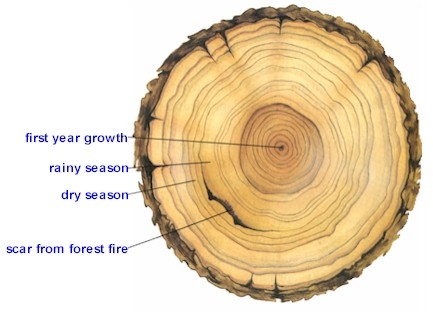 "From our earliest days, each of us has been engaged in an ongoing journey to learn and to grow. These two human forces are often connected, but they are not the same. Learning can be about acquiring a new skill or knowledge base. If I master PowerPoint in order to put together a slide show for a client, I have learnt something. I have new information in my head. But have I really grown? From a developmental perspective, real growth requires some quantitative shift, not just in knowledge, but in perspective or way of thinking. Growing is when the form or our understanding changes; we often call this "transformation."... Each moment of our development, then, is a potentially term form of mind that, with the right support, can be more expansive. As we grow, the previous form is overtaken by the new form, leaving traces of less-mature form behind like rings in a tree trunk."
Overall Changing on the Job is a very engaging book with a global appreciation of what it means to develop as a leader. I found that chapters 3 and 4 were the most theoretical (and therefore personally the harder parts to read), but that there were immensely power chapters towards the end - especially 'transformational habits of mind'.
I would recommend this book to teachers who, in a mentoring capacity, have students of leadership potential. I found Changing on the Job made me better aware of the spectrum of leadership and how differently the student leaders may view the world to me. I would also recommend this book to any teacher that is looking at the option of taking position of management.
Here is a YouTube clip which has Jennifer Garvey Berger presenting her own book.
This post relates to RTC#8. "Demonstrate in practice their knowledge and understanding of how ākonga learn." and RTC#7. "Promote a collaborative, inclusive and supportive learning environment."
Sunday, March 29, 2015
Self Reporting Grades Part i)
 Students Self Reporting Grades
On Friday last week Vicky, Jo, Leon and I were lucky enough to make the trip up to Auckland to hear John Hattie speak at the Visible Learning Plus summit. John Hattie has forged a strong reputation as one of the world premiere educationalists and is in high demand around the globe.
I have reviewed one of his books Visible Learning for Teachers : Maximising Impact on Learning. Here is a link to my review (click here). Here is a link to the Visible Learning website (click here).

One of the key messages from the summit was that teachers should also look at the effective means available to students themselves. Interestingly these are quantifiable more beneficial to learning than what the teachers can influence (aka getting the students flying themselves is better than teachers driving).
Here is the same diagram but looking at the strategies that the student is in control of...

At the conference there was much made of the 'self-reported grades'. At an effect size of 1.44 this equates to over three times as much progress as just aging. Or 50% more effective than formative evaluation.
How is it that we can get our Waihi College students to be better at self-reported grading? Is it enough to just get the students to judge themselves as "N", "A", "M" or "E"?
Primarily it is about having the students moved more towards become auto-didactic. Being able to be their own teachers.
Historically the system has been that teachers have been the gatekeepers of knowledge and would typically drip feed that knowledge out in the classroom. Students would sit assessments at times where the teacher had confidence that the students have 'received' enough learning. Sometimes teachers would have little appreciation of whether the learning had actually taken place.
Hattie was interested in having the learning become 'Visible' - that is the students can explicitly see their progression through the content. Question - what would that look like here at Waihi College?
This post relates to RTC #6 "Conceptualise, plan and implement an appropriate learning programme." And RTC #8. "Demonstrate in practice their knowledge and understanding of how ākonga learn- i) enable ākonga to make connections between their prior experiences and learning and their current learning activities & iii) encourage ākonga to take responsibility for their own learning and behaviour."
Thursday, March 19, 2015
Creating Innovators
Book Review
Creating Innovators : The Making of Young People Who Will Change the Word. By Tony Wagner
I found this book a very enjoyable read. I have read another good book by Tony called The Global Achievement Gap which was an educationalist's view of the world around the Global Financial Crisis of 2008.
 The thing that most surprised me was that Creating Innovators is a book that is intrinsically linked to a website (click here for link) with videos that drive the writing within each chapter..
Tony identifies the key set of skills and habits of mind that modern students need to thrive in the world. Those are;
Much of the lament of Tony's comments on the American education system (over emphasis on testing and a highly specified curriculum) are things that New Zealand schools don't face. Our NZC opens up the opportunity for teachers to innovate their learning into wide contexts.
Another wee gem in Creating Innovators is the 'letter to a young innovator' - five pages at the end of the book where Tony writes directly to modern day learners. Here he offers advice to young people about the opportunity and importance of becoming more and more innovative.
I would recommend this book to any teacher interested in the 'big picture' of education. It is an interesting read (one you'll have to do with access to the internet). It was a readable book, one that you can digest over a weekend. If I had any critique it was that it was too intercontinental United States.
This post relates to RTC#8. "Demonstrate in practice their knowledge and understanding of how ākonga learn." and RTC#7. "Promote a collaborative, inclusive and supportive learning environment."
Creating Innovators : The Making of Young People Who Will Change the Word. By Tony Wagner
I found this book a very enjoyable read. I have read another good book by Tony called The Global Achievement Gap which was an educationalist's view of the world around the Global Financial Crisis of 2008.
 The thing that most surprised me was that Creating Innovators is a book that is intrinsically linked to a website (click here for link) with videos that drive the writing within each chapter..
Tony identifies the key set of skills and habits of mind that modern students need to thrive in the world. Those are;
Chapter Five was the most interesting for me as a teacher in a high school. Here Tony works through the conservative nature of education within modern secondary schools. He highlights the traditional nature of education was based upon facts, but that there is an exponential growth in the amount of facts. Primarily he challenges secondary teachers to seek new ways of finding relevance and meaningful connections with their students. Ideally creating within our students the development of passion and purpose in their learning.
- Curiosity,
- Collaboration,
- Associated and Integrated Thinking (aka adaptability), and,
- Taking action (experimenting).
Much of the lament of Tony's comments on the American education system (over emphasis on testing and a highly specified curriculum) are things that New Zealand schools don't face. Our NZC opens up the opportunity for teachers to innovate their learning into wide contexts.
Another wee gem in Creating Innovators is the 'letter to a young innovator' - five pages at the end of the book where Tony writes directly to modern day learners. Here he offers advice to young people about the opportunity and importance of becoming more and more innovative.
I would recommend this book to any teacher interested in the 'big picture' of education. It is an interesting read (one you'll have to do with access to the internet). It was a readable book, one that you can digest over a weekend. If I had any critique it was that it was too intercontinental United States.
This post relates to RTC#8. "Demonstrate in practice their knowledge and understanding of how ākonga learn." and RTC#7. "Promote a collaborative, inclusive and supportive learning environment."
Tuesday, February 24, 2015
Nigel Latta At Waihi College
Nigel Latta
 Last night Waihi College had the priviledge of hosting well know New Zealand Nigel Latter for a presentation solely for teachers. Thanks to the NZEI who where to funder of Nigel's talk.
I find it hard not to like Nigel Latta - he has quick wit and a cheeky nature. Teachers in attendance were highly entertained. But more importantly I believe that Nigel has a good head for the realities of dealing with young adolescents. His psychologist background and vast experiences with 'troubled' youth means that he looks for ways ahead.
There were some key messages that have stuck with me since his talk. They were...
Another small thing worth mentioning is his use of 'Keynote' programme instead of PowerPoint - it was excellent (I think that there may be some self directed PD on this product ahead for me).
This post is related to RTC# 5. show leadership that contributes to effective teaching and learning
 Last night Waihi College had the priviledge of hosting well know New Zealand Nigel Latter for a presentation solely for teachers. Thanks to the NZEI who where to funder of Nigel's talk.
I find it hard not to like Nigel Latta - he has quick wit and a cheeky nature. Teachers in attendance were highly entertained. But more importantly I believe that Nigel has a good head for the realities of dealing with young adolescents. His psychologist background and vast experiences with 'troubled' youth means that he looks for ways ahead.
There were some key messages that have stuck with me since his talk. They were...
- Behaviour is Communication. That is that the way students behave (and misbehave) is a form of communication. This I thought was very valid for me as a teacher. I can see that students that are struggling, bored or not engaged are the students most likely to struggle with their behaviour.
- Punishment does not equal punitive. Nigel had a clear message that students need to understand the natural consequences of their actions. But that teachers/administrators need to be human about their approaches.
- That the most important thing with relationships with teachers is to be personable and fair.
Another small thing worth mentioning is his use of 'Keynote' programme instead of PowerPoint - it was excellent (I think that there may be some self directed PD on this product ahead for me).
This post is related to RTC# 5. show leadership that contributes to effective teaching and learning
and RTC #8. demonstrate in practice their knowledge and understanding of how ākonga learn
Sunday, October 12, 2014
Professional Learning Community
High Trust Conversation Starters

 The importance of having a network around you as a professional teacher cannot be understated. All teachers need to be able to find others who are willing to invest their time, energy and wisdom into their colleagues. This point was highlighted by Hargreaves and Fullan in Professional Capital...
"Individuals get confidence, learning, and feedback from having the right kind of people and the right kind of interactions and relationships around them." (2012, p. 4)
 John Hattie in his book Visible Learning For Teachers: Maximising Impact on Learning says...
"Teachers who do not acknowledge the importance of peer feedback can be the most handicapped in their effects on students.” p.147
The following questions are designed to create honest and open conversations between professionals. They are simple questions that are not supposed to have “correct” answers – rather they are designed to spark deepen our understanding of each other’s practice.
The purpose here is not to 'prove' anything to anyone. Rather the purpose here is to 'improve'. The people who you are working with have all decided that their lives to the education of young people.
I have designed the following questions in an attempt start honest and open conversations between teachers. They are simple questions that are not supposed to have “correct” answers – rather they are designed to spark deepen our understanding of each other’s practice.
A good tip to keep the conversation moving is for there to be change of focus at regular intervals. One person presenting honest discussion about their experiences/habits – the others listening (soak it in) and moving into constructive advice/questioning/empathy. Five minutes and then try another conversation starter led by a different person.
Remember – high trust + open to learning = respect.
[These are not in any particular order – you may not get through them all].
1. Identify any administrative issue you feel is a challenge/confusing/wasteful.
2. Describe the things have changed about the classes you teach year.
3. Describe the extent of challenge you are having in regards to demand on your time.
4. Give a summary of your last period class yesterday.
5. Tell about what is it about a student you find particularly challenging or hard to reach.
6. Describe what areas of you teaching you’ve feel you’ve been neglecting recently.
7. Tell us about a lesson that you’ve had recently that didn’t go well.
8. If you could be given some extra non-contact time how would you spend that time?
This post relates to RTC # 1. establish and maintain effective professional relationships focused on the learning and well-being of ākonga - engage in ethical, respectful, positive and collaborative professional relationships with teaching colleagues, support staff and other professionals
and RTC #8. demonstrate in practice their knowledge and understanding of how ākonga learn.
 The importance of having a network around you as a professional teacher cannot be understated. All teachers need to be able to find others who are willing to invest their time, energy and wisdom into their colleagues. This point was highlighted by Hargreaves and Fullan in Professional Capital...
"Individuals get confidence, learning, and feedback from having the right kind of people and the right kind of interactions and relationships around them." (2012, p. 4)
 John Hattie in his book Visible Learning For Teachers: Maximising Impact on Learning says...
"Teachers who do not acknowledge the importance of peer feedback can be the most handicapped in their effects on students.” p.147
The following questions are designed to create honest and open conversations between professionals. They are simple questions that are not supposed to have “correct” answers – rather they are designed to spark deepen our understanding of each other’s practice.
The purpose here is not to 'prove' anything to anyone. Rather the purpose here is to 'improve'. The people who you are working with have all decided that their lives to the education of young people.
I have designed the following questions in an attempt start honest and open conversations between teachers. They are simple questions that are not supposed to have “correct” answers – rather they are designed to spark deepen our understanding of each other’s practice.
A good tip to keep the conversation moving is for there to be change of focus at regular intervals. One person presenting honest discussion about their experiences/habits – the others listening (soak it in) and moving into constructive advice/questioning/empathy. Five minutes and then try another conversation starter led by a different person.
Remember – high trust + open to learning = respect.
[These are not in any particular order – you may not get through them all].
1. Identify any administrative issue you feel is a challenge/confusing/wasteful.
2. Describe the things have changed about the classes you teach year.
3. Describe the extent of challenge you are having in regards to demand on your time.
4. Give a summary of your last period class yesterday.
5. Tell about what is it about a student you find particularly challenging or hard to reach.
6. Describe what areas of you teaching you’ve feel you’ve been neglecting recently.
7. Tell us about a lesson that you’ve had recently that didn’t go well.
8. If you could be given some extra non-contact time how would you spend that time?
The end result of this activity is that
collectively as a group you will have a greater understanding of each
other. That you will be conscious of the
intentions, frustrations, positives and negative we all face here at
school.
I have saved this document
in S:\Administration\Appraisal\High
Trust Conversation Starters.docx
This post relates to RTC # 1. establish and maintain effective professional relationships focused on the learning and well-being of ākonga - engage in ethical, respectful, positive and collaborative professional relationships with teaching colleagues, support staff and other professionals
and RTC #8. demonstrate in practice their knowledge and understanding of how ākonga learn.
Sunday, September 14, 2014
Book Review
Professional Capital Transforming Teaching in Every School
by Andy Hargreaves and Michael Fullan
 This was a book that I picked because of the authors. Micheal Fullan is a sound educationalist who wrote "Putting the faces on the data" (a book that I share strong agreement with). And Andy Hargreaves is an Englishman, teacher come professor and now lives in Boston in the US.
This book really is an attempt to write a utopian view point of how education should be in schools. Fullan and Hargreaves attempt to write the ingredients they believe with revolutionise schooling - they make a compelling argument.
I found that whilst the primary target audience for this book is those in leadership Professional Capital has a great deal in there for all teachers. I found myself taking notes and quotes from the book and once I'd finished these were over four pages long.
Here at Waihi College with the appointment of our schools 'Learning Leaders' I found that Professional Capital greatly helped me in developing my own understanding of where management can best help transform the culture.
One of the best quotes from Hargreaves and Fullan which really sums up the overarching theme of Professional Capital is (emphasis is mine)...
I would definitely recommend this book to other educators. It was not a huge read (about 160 pages then referencing). It was read more as a persuasive and passionate argument than a thesis by academia. Finally for those that are unsure if they'd be interested in reading this book here is the cliff note video version from the authors themselves.
This post is in relation to RTC #4. "demonstrate commitment to ongoing professional learning and development of personal professional practice." And RTC # 8. "demonstrate in practice their knowledge and understanding of how ākonga learn."
by Andy Hargreaves and Michael Fullan
This was a book that I picked because of the authors. Micheal Fullan is a sound educationalist who wrote "Putting the faces on the data" (a book that I share strong agreement with). And Andy Hargreaves is an Englishman, teacher come professor and now lives in Boston in the US. This book really is an attempt to write a utopian view point of how education should be in schools. Fullan and Hargreaves attempt to write the ingredients they believe with revolutionise schooling - they make a compelling argument.
I found that whilst the primary target audience for this book is those in leadership Professional Capital has a great deal in there for all teachers. I found myself taking notes and quotes from the book and once I'd finished these were over four pages long.
Here at Waihi College with the appointment of our schools 'Learning Leaders' I found that Professional Capital greatly helped me in developing my own understanding of where management can best help transform the culture.
One of the best quotes from Hargreaves and Fullan which really sums up the overarching theme of Professional Capital is (emphasis is mine)...
"The secret to higher efficacy and to keeping teachers is not just making sure that teacher get individual support, here or there, but that they get to work in well-led, dynamic, strongly supported schools, where there is a belief in student success, a knowledge of how to bring it about, and a willingness and eagerness for everyone on the staff to keep learning and improving - inexperienced and experienced alike. It is, in other words, the culture of the school that makes the difference. If you get this right, if you change the teacher by changing the entire school and profession, then no matter what challenges teachers have to face, a big payback will come through just a few years down the line." (Hargreaves and Fullan, 2014, p. 70)
I would definitely recommend this book to other educators. It was not a huge read (about 160 pages then referencing). It was read more as a persuasive and passionate argument than a thesis by academia. Finally for those that are unsure if they'd be interested in reading this book here is the cliff note video version from the authors themselves.
This post is in relation to RTC #4. "demonstrate commitment to ongoing professional learning and development of personal professional practice." And RTC # 8. "demonstrate in practice their knowledge and understanding of how ākonga learn."
Subscribe to:
Posts (Atom)