Showing posts with label Teaching and Learning. Show all posts

Monday, May 9, 2016

Raising Student Achievement

Raising Student Achievement Through Targeted Actions

ERO produced a report at the end of 2015 which outlined for teachers (and school leaders) insights into effectively creating targets to accelerate students learning.  

This document represents a substantive analysis into what specific actions school leaders are taking to review the impact initiatives are having upon student progress.  The material specifically challenges management to justify their choices around measurable gains.  

I found this report to be extremely useful as it works through multiple aspects of education from BOT (governance level), through leadership, teacher and students/parents.  Many of the findings of the reports used case examples to juxtaposition success variations of strategies on less successful attempts.  

The importance of data is evident throughout this report.  The authors emphasising that schools are most likely to have the correct initiative/ideas in mind when planning change.  But often the success of these initiatives/ideas is inhibited by some simple failings.  The use of quality data (and by default reports) is a primary focus.  ERO challenges schools to strive to build up the capacity within staff for making improvements.  "The most significant difference between schools that succeeded and less successful schools was the explicit commitment to both equity and excellence." (p.36) 

This post is related to RTC #6. "Conceptualise, plan and implement an appropriate learning programme - i. articulate clearly the aims of their teaching, give sound professional reasons for adopting these aims, and implement them in their practice."  And ERO's School Evaluation Indicators Domain 2 Leadership of conditions for equity and excellence - "Leadership build capability and collective capacity in evaluation and inquiry for sustained improvement and innovation." 

Sunday, October 18, 2015

Passionate and Inspired Teachers

Inspired Teaching and Passionate Teachers
As a part of our work with Cognition Education and their Visible Learning Plus programme we looked today at the notion of 'inspired and passionate teaching'.  I have a theory that because teaching is not the best paid profession that is out there the overwhelming majority of teachers have signed up to a life of education because of a great deal of personal inspiration and passion for learning.  


It is also a fact that teaching is a very hard profession as Guy Claxton and Bill Lucas put in their Educating Ruby book; “Teachers know that controlling crowds of bored teenagers, or squeezing a few extra children across an arbitrary assessment borderline, is not what lights their fire.  It is not why they wanted to become teachers in the first place.” (2015, p. 31)  Modern teaching is a process of continually fronting up in the classroom and doing your best.  For most teachers levels of passion and inspiration will ebb and flow.  It is a conscious effort for each individual teacher to monitor themselves.  

Specific emphasis on 'passion and inspiration' is placed upon the quality of the relationships between the teacher and his/her students.  That's something that is axiomatic for most teachers... yet strained teacher student relationship would be one of the most pressing issues in modern schooling.  

Here is a copy of the PowerPoint presentation that we worked through last Monday.   


This post relates to RTC #1. "Establish and maintain effective professional relationships focused on the learning and well-being of ākonga".  And ERO's School Evaluation Indicators Domain 4 "Responsive Curriculum, Effective Teaching and Opportunity to Learn - students develop learning to learn capabilities."

Thursday, August 20, 2015

Know Thy Impact

As a part of a series of workshops on Visible Learning Plus (the supplementary material for John Hattie's seminal work).  This is the presentation that was made to staff in our afternoon meeting.  

The purpose here is to form a collective understanding of the shared practice here at Waihi College around use of assessment information.  

Being a teacher who uses quality data to inform our practice is a vital component of modern teaching.  But there is a genuine plethora of data available to staff and this can create issues around sifting through this information.  

Here is the powerpoint that was presented.  The key points are...


  1. Teachers should be responsive to the students needs. 
  2. We should be self reflective on our practice (are we making the difference - having an impact).
  3. There are a variety of types of assessment - each with their own purpose.  We should be using the full gambit to inform ourselves.
  4. This ties very well into 'Teaching as Inquiry' - which is a core component of our appraisal system and the Registered Teacher Criteria.  


Know thy impact 10th august 2015 from WaihiCollege


Here is a copy of the video that was presented. 

This post relates to RTC #6  "Conceptualise, plan and implement an appropriate learning programme." And RTC #8. "Demonstrate in practice their knowledge and understanding of how ākonga learn- i) enable ākonga to make connections between their prior experiences and learning and their current learning activities & iii) encourage ākonga to take responsibility for their own learning and behaviour."And ERO's School Evaluation Indicators Domain 4. "Assessment activities are inclusive, authentic and fit-for- purpose, providing relevant and meaningful evidence to evaluate the student's achievement and progress." 

Sunday, May 10, 2015

Mini Visits (Post # 2)

Professional Conversations

Part of the movement towards having closer professional learning relationships here at Waihi College has seen some new innovations to our systems.  A new approach that we're going to bring in here is the practice of 'mini-visits'.  Here is a link to my recent post on this idea (click here).  

Here is the presentation that I made at staff meeting on Monday...


The plan is to cover your classes (unless non-contacts work for you) for ten mins to allow you to be able to visit another teacher's classroom.  Obviously good to plan these in advance (a heads up for admin).  Please jump onto these asap rather than letting them linger on.

This post relates to RTC #  1. "Establish and maintain effective professional relationships focused on the learning and well-being of ākonga - i. engage in ethical, respectful, positive and collaborative professional relationships with: teaching colleagues."

Tuesday, May 5, 2015

Book Review

David & Goliath : Underdogs, Misfits and the Art of Battling Giants.  By Malcolm Gladwell.

This is the latest in the line of excellent books by Malcolm Gladwell (Outliers and Blink I would highly recommend).  David & Goliath is one of the rare books where an international bestseller writes so clearly on educational ideas.

Gladwell's style is very good - he takes complex notions and illustrates them well in real life narrative.  He takes you as a reader to Paris in the Impressionist art movement, to the ancient biblical setting of Judea, back into modern settings.  Each new story bringing out his ideas of overcoming adversity.

Malcolm Gladwell
As an educator I was most impressed by chapter four where Gladwell works through an explanation of the science of dyslexia.  This complex medical term has grown and grown in educational circles - but remains to most teachers something of a mystery.  The beginning pages of this chapter was a concise/clear summary of what is happening inside the head of a young person with dyslexia.
 
 Another great chapter for teachers to read is chapter two where the majority of the material is focused on the best class size (a controversial and political  subject).  Gladwell takes a scientific approach to calculating what is the best size class for learning.  He works well through the balance of work loads, class engagement, teacher one on one time and classroom management.  FYI Gladwell concludes that too smaller classes (which are major selling points for private schooling) are not the best.  Rather he settles on 24 or 18 as these can be assigned into groups easily.  It is interesting to see he's constantly looking at the underdogs so considers greatly those introverted/shy students in classes.

I related well to the sections devoted to the 'size of the pond'.  Here Gladwell contrasts the effects of being the big fish - small pond vs being a big fish - great big pond.  For us here at Waihi College (with cohorts around 100 students) has many tangible positives.

I would definitely recommend this book.  Teachers that would get additional benefit from reading David & Goliath are career counselors, teachers with dyslexic students, teachers from the STEM (science, technology, engineering and maths classes), and those interested in the big picture around education.

Finally here is a quick YouTube clip of Gladwell discussing his latest book...


This post relates to RTC#8. "Demonstrate in practice their knowledge and understanding of how ākonga learn." and RTC#7. "Promote a collaborative, inclusive and supportive learning environment."


Monday, May 4, 2015

Self Reporting Grades Part ii)

Empowering Student's Learning

One of the most exciting presentations from the Visible Learning Summit from term one this year was the presentation by the Selwyn College leadership team.  

Selwise
Please take some time to have a look at the following video of Selwyn College.  It is a summary of their journey over the last six year (new Principal in 2008) with some dramatic improvements in their outcomes.  One of the things that was presented at the conference was the benefits of explicitly presenting the language of learning - as you watch take note of the ways visually that Selwyn College has deliberately presented this.  

They have formulated a shared level of learning 'advertising' that is the standard across the school.  Students are re-enforced this values and methods in all their class.  Selwyn College is deliberately teaching meta-cognitive strategies to students with the goal of making them better learners.  

Selwyn College was a finalist in the annual Prime Minister's Education Excellence Awards in: Excellence in Leading - Atakura Award in 2014.  Their NCEA results progressed from pass rates below 50% of students to consistently in the 90%.   


One of the major changes that Selwyn College went through was to try to empower their students to chart their own way through their learning.  The way that they did this was to supply the students a detailed (in student language) descriptor of what each level of the learning was.  That is they'd take the NZ Curriculum's Achievement Objectives (click here) and drill down to what that would mean in the classroom - with exemplar illustrations.  That way the student is empowered to know exactly where they are in their learning and what the next steps in their learning would/should be.  

This was identified by ERO here at Waihi College when they highlighted a next step in our journey being "Quality Assurance... monitoring student's progress with agreed parameters."
The idea here being that the student would be able to understand what it is that they know (where they are in the curriculum) and that they'd be able to see the next steps in their learning to move themselves forward.  This relates very well to John Hatties most influential (biggest effect size) factor in student achievement - 'Self Reported Grades' (click here for evidence).  

Here is John Hattie briefly presenting a summary of his meta study (about five mins)...

This leads us to consider the norms of practice here at Waihi College.  How is it that we're focussing our collective efforts to making learning more visible?   What habits and systems do we share as teachers here at school that empower our students to progress in their learning?  

This post relates to RTC #6  "Conceptualise, plan and implement an appropriate learning programme." And RTC #8. "Demonstrate in practice their knowledge and understanding of how ākonga learn- i) enable ākonga to make connections between their prior experiences and learning and their current learning activities & iii) encourage ākonga to take responsibility for their own learning and behaviour."

Mini Visits

Classroom Visits

I can remember way back to when I was first training as a teacher.  I had three practicums, with three associate teachers.  I remember them fondly and appreciated at the time the step learning curve I was on.  There was however one associate who stood out - his strategy was to farm me out.  Each day he would point me off to another teacher "go see Jones teach - she's great with year 10's" or "go see Smithy teach - he's super organised".  So there I was training to be a Mathematics teacher with an associate putting me in Art and PE and Science etc.  But actually this was the most beneficial time in my training - you see each new class, each new teacher I picked up one more strategy or one more approach or one more management style. 

Last year when I had the opportunity to come along and see many of you teach reminded me of that experience.  I could see that Waihi College has very high standards of teaching across the board with pockets of excellence.  Again I found myself thinking "I like that method" or "that's a great resource" and thinking about how this could be adapted to my practice.  


ERO in there 2014 visit pointed to one of the College's 'Quality Assurance's Next Steps' "is to ensure good/effective practice is far more consistent across the school".

This term one of the things that we (myself and the Learning Leaders) will endeavour to do is to provide all the staff with an opportunity for you to get around to your colleagues classes.  That is to come to your classes and free you up for 10 - 15 mins to go see your colleagues and students.  

Who could you visit?

  1. Colleagues from your curriculum area - picking up tips within your subject.
  2. Colleagues that share a class - seeing how teachers operate with the same students you teach.
  3. Colleagues from elsewhere - don't underestimate the quality that exists in other areas.

The hope here is that you'll be able to pick up some ideas, skills and new habits from your colleagues.  That the conversations you have about your teaching with your colleagues will be more meaningful as you can specifically talk about the dynamic in the classrooms.  

So from here we'd like for you to consider talking with your colleagues, those staff you respect (or have heard good things about) and gauge their availability to a visit.  If you have not class (non contact) you can use that time - or alternatively if you want cover please let me know.  I'm very happy to free you up to get this happening.  I'm hoping that in this year you will be able to visit at least three different teachers.  

This post is in relationship to RTC #  1. "Establish and maintain effective professional relationships focused on the learning and well-being of ākonga - i. engage in ethical, respectful, positive and collaborative professional relationships with: teaching colleagues."

Secondary Teacher Study Awards

The Annual Study Awards


One of the key parts to the 'Vision' of the New Zealand Curriculum document is that our young people are "Lifelong learners" that they'll be "active seekers, users, and creators of knowledge".  This same challenge sits will us as teachers.

I have always thought that one of the very positive parts of working in the education sector is the opportunities we have in furthering our learning.  Every year the Ministry of Education (TeachNZ) offers three different types of study awards.  From now until the 8th of June applications are invited from teachers at NZ schools to consider taking on some individual study.  

The three study awards are...

  1. 75 Secondary Teachers' Study Award - this is study leave opportunity to study a qualification, undertake research, or obtain practical knowledge in an area related to your subject.
  2. 40 Sabbaticals - 10 weeks of full paid leave.  To be eligible you need to have 20 years teaching experience in NZ (including the last seven years), and intend on returning to teaching.  
  3. 100 Study Support Grants - these are for one year and provide cover for one class (0.16 FTTE) to study an area related to education/subject.  There is also $500 contribution to course costs.  
If you are considering applying for one of these three study awards you can find more information at the following web address (click here).

Karen Bryant was able to access one of these study grants to complete her recent study.  Speaking with Karen she is very grateful for that opportunity and would recommend this to those considering the option.  

This post relates to RTC #4. demonstrate commitment to ongoing professional learning and development of personal professional practice - iii. initiate learning opportunities to advance personal professional knowledge and skills. 

Monday, April 27, 2015

Book Review

Changing on the Job : Developing Leaders for a Complex World. By Jennifer Garvey Berger

This was a most excellent read.  Jennifer Garvey Berger is a kiwi educational theorist from the Wellington region.  She has written this book about managing change as professionals.  Although this book is not specifically about secondary education or teachers it is a valid and engaging read for anyone serious about professional development.  I found that in my role of facilitating some of the professional development here at school that Changing on the Job caused me to be very introspective and reconsider many of my assumptions on how teachers progress in their development.

Jennifer uses a pragmatic style of writing where she presents hypothetical situations and exams a series of ways you could potentially approach them.  I found that she accurately described the traits I have with problems (i.e. seeking immediate solutions) and works coherently through the subtle distinctions in what constitutes the various 'forms of mind' (I've discovered that I'm a 'self authored' form of mind).


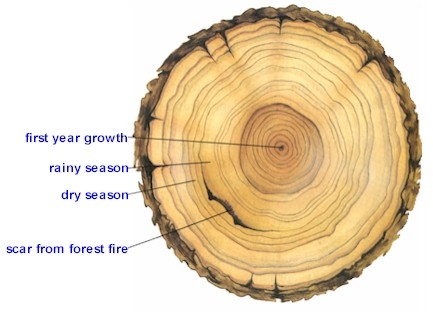
Garvey Berger makes use of some powerful imagery in her writing.  If found that her metaphor of growing in skills and knowledge like the rings of a tree as particularly useful.
"From our earliest days, each of us has been engaged in an ongoing journey to learn and to grow.  These two human forces are often connected, but they are not the same.  Learning can be about acquiring a new skill or knowledge base.  If I master PowerPoint in order to put together a slide show for a client, I have learnt something.  I have new information in my head.  But have I really grown?  From a developmental perspective, real growth requires some quantitative shift, not just in knowledge, but in perspective or way of thinking.  Growing is when the form or our understanding changes; we often call this "transformation."... Each moment of our development, then, is a potentially term form of mind that, with the right support, can be more expansive.  As we grow, the previous form is overtaken by the new form, leaving traces of less-mature form behind like rings in a tree trunk."

Overall Changing on the Job is a very engaging book with a global appreciation of what it means to develop as a leader.  I found that chapters 3 and 4 were the most theoretical (and therefore personally the harder parts to read), but that there were immensely power chapters towards the end - especially 'transformational habits of mind'.

I would recommend this book to teachers who, in a mentoring capacity, have students of leadership potential.  I found Changing on the Job made me better aware of the spectrum of leadership and how differently the student leaders may view the world to me.  I would also recommend this book to any teacher that is looking at the option of taking position of management.

Here is a YouTube clip which has Jennifer Garvey Berger presenting her own book.


This post relates to RTC#8. "Demonstrate in practice their knowledge and understanding of how ākonga learn." and RTC#7. "Promote a collaborative, inclusive and supportive learning environment."

Tuesday, April 21, 2015

Improving NCEA Results

James Cook High School

James Cook High School in Manukau South Auckland is a larger school than Waihi College (1200 students year 9-13 as opposed to our 500).  They have had a very remarkable story of turning around their qualification results for their students.

The were featured in the New Zealand Herald in the school holidays (click here for that article).  Some of the interesting comments in that article was what their Principal Vaugh Couillault had to say;

Mr Couillault, who joined the school in 2012, says the results are indicative of serious amounts of work from teaching and support staff, who deal with kids who come to the school usually well below standard.
"At year nine, our kids are up to four years below where they should be," he says. "And it takes a lot of hard yakka to help them from there."
He hints at some of the interventions that James Cook High teachers put into place for their students;

It's about making a real effort to know our learners. Not about just standing up the front. But any teacher worth their salt will be doing that."
They also collect "hard core" data, and can make changes on almost a daily basis around what is and isn't working, he says.

Last night there was a report on TVNZ's One News on the increased results (up from 42% of students in year 11 getting Level One 2014 up to 95% in 2015).

Here is a copy of that report (intellectual property of TVNZ)...[takes a min to load]


James Cook High School is a good example of how a school can work towards a collective goal of increasing the qualification results of their students.  I find myself interested in the finer details around the changes they have put in place.  Here is a summary of the main points...

  1. Perseverance - teachers not giving up on the kids (further opportunities) and kids not giving up (coming in in their holidays).
  2. Re-looking at the middle management - splitting up teachers into smaller groups to increase accountability around results.  
  3. Sense of Pride - looking at giving the student more pride in the community (including uniform etc).  Modernising the look of the school.  
  4. Face lift - The school had new building programme (Waihi College is due new block to replace P Block).  
  5. Student Centered Learning - getting personalised in the learning.  Identifying the needs of each individual student and getting the learning individualised.  


"I want every student that walks out the gate to simply be in charge of what happens to them next." - Vaugh Couillault

This post relates to RTC #6. "Conceptualise, plan and implement an appropriate learning programme i. articulate clearly the aims of their teaching, give sound professional reasons for adopting these aims, and implement them in their practice." And RTC #11. "Analyse and appropriately use assessment information, which has been gathered formally and informally i. analyse assessment information to identify progress and ongoing learning needs of ākonga 
ii. use assessment information to give regular and ongoing feedback to, guide and support further learning, iii. analyse assessment information to reflect on and evaluate the effectiveness of the teaching." 


Sunday, March 29, 2015

Self Reporting Grades Part i)

Students Self Reporting Grades

On Friday last week Vicky, Jo, Leon and I were lucky enough to make the trip up to Auckland to hear John Hattie speak at the Visible Learning Plus summit.  John Hattie has forged a strong reputation as one of the world premiere educationalists and is in high demand around the globe.   

I have reviewed one of his books Visible Learning for Teachers : Maximising Impact on Learning.  Here is a link to my review (click here).  Here is a link to the Visible Learning website (click here).

Previously most pd has been focussed around the things that teachers can do to best maximise the learning in the classroom.  Such as providing formative assessments, reciprocal teaching and feedback.

One of the key messages from the summit was that teachers should also look at the effective means available to students themselves.  Interestingly these are quantifiable more beneficial to learning than what the teachers can influence (aka getting the students flying themselves is better than teachers driving).

Here is the same diagram but looking at the strategies that the student is in control of...


At the conference there was much made of the 'self-reported grades'.  At an effect size of 1.44 this equates to over three times as much progress as just aging.  Or 50% more effective than formative evaluation.  

How is it that we can get our Waihi College students to be better at self-reported grading?  Is it enough to just get the students to judge themselves as "N", "A", "M" or "E"?

Primarily it is about having the students moved more towards become auto-didactic.  Being able to be their own teachers.  

Historically the system has been that teachers have been the gatekeepers of knowledge and would typically drip feed that knowledge out in the classroom.  Students would sit assessments at times where the teacher had confidence that the students have 'received' enough learning.  Sometimes teachers would have little appreciation of whether the learning had actually taken place.  

Hattie was interested in having the learning become 'Visible' - that is the students can explicitly see their progression through the content.  Question - what would that look like here at Waihi College?


This post relates to RTC #6  "Conceptualise, plan and implement an appropriate learning programme." And RTC #8. "Demonstrate in practice their knowledge and understanding of how ākonga learn- i) enable ākonga to make connections between their prior experiences and learning and their current learning activities & iii) encourage ākonga to take responsibility for their own learning and behaviour."


Sunday, March 15, 2015

Building Resilience

The Risks Of Praise

There was an interesting article in the Herald on Sunday which challenged the notion of positive praise for students.  It makes for a good read and an excellence source for discussion on teaching and learning.


I like educational articles in newspapers.  You see everyone is a self appointed expert, everyone has been through the schooling system.  I find myself liking this article too, but I think that it can be misused...

University of Melbourne's Professor Stephen Dinham has urged teachers to ditch untested learning styles - including glowing praise and shying away from giving bad marks - if they wanted children to succeed.
That included "self-boosting" where students were saturated in "rampant positivity".

I think that our NZ Curriculum works well with the wider education of the child (the core 'Values' of "excellence, innovation, inquiry, and curiosity").  I like to think that most teachers have a good instincts for pushing and encouraging our students.

Giving children regular, constructive feedback about how to improve was a better policy, he said.
"We need to say to kids that they can do this, they can't do that but to move their learning forward they need to do this, that or the other. What we don't say is you're good or bad at something," said Dinham.
This reinforced a valuable message that effort brought reward.
This is where I believe the notion of 'growth mindset' comes into play (see my posting on Dr Carol Dweck here).  The idea that we can build into our teaching practice that students can achieve more if they're in the frame of mind that they can grow.

This post is related to RTC#1. "Establish and maintain effective professional relationships focused on the learning and well-being of ākonga." And RTC#6. "Conceptualise, plan and implement an appropriate learning programme i. articulate clearly the aims of their teaching, give sound professional reasons for adopting these aims, and implement them in their practice." 


Sunday, March 1, 2015

Professional Learning Groups

Small Group Professional Learning

Here is the material that I presented to staff about PLG's.

Ideally the groups should be small enough to be personable.  Big enough to generate their own momentum.


This post relates to RTC#4. demonstrate commitment to ongoing professional learning and development of personal professional practice and RTC #5. show leadership that contributes to effective teaching and learning  i. actively contribute to the professional learning community 


Tuesday, February 24, 2015

Nigel Latta At Waihi College

Nigel Latta

Last night Waihi College had the priviledge of hosting well know New Zealand Nigel Latter for a presentation solely for teachers.  Thanks to the NZEI who where to funder of Nigel's talk.  

I find it hard not to like Nigel Latta - he has quick wit and a cheeky nature.  Teachers in attendance were highly entertained.  But more importantly I believe that Nigel has a good head for the realities of dealing with young adolescents.  His psychologist background and vast experiences with 'troubled' youth means that he looks for ways ahead.  

There were some key messages that have stuck with me since his talk.  They were...


  1. Behaviour is Communication.  That is that the way students behave (and misbehave) is a form of communication.  This I thought was very valid for me as a teacher.  I can see that students that are struggling, bored or not engaged are the students most likely to struggle with their behaviour.  
  2. Punishment does not equal punitive.  Nigel had a clear message that students need to understand the natural consequences of their actions.  But that teachers/administrators need to be human about their approaches.  
  3. That the most important thing with relationships with teachers is to be personable and fair.  
It was an excellent evening out.  Nigel pushed an up and coming TV series on science (which looks excellent).  

Another small thing worth mentioning is his use of 'Keynote' programme instead of PowerPoint - it was excellent (I think that there may be some self directed PD on this product ahead for me).  

This post is related to RTC# 5. show leadership that contributes to effective teaching and learning
 and RTC #8. demonstrate in practice their knowledge and understanding of how ākonga learn

Wednesday, November 19, 2014

Teachers Collective Views Quality Lessons at Waihi College

Quality Delivery of Lessons
It was great to see the consistency of ideas across our collective staff.  This was evidenced by the common themes on the posters we created in our morning pd this term on the 22nd October (see this link to that pd).

The idea of a shared understanding of quality practice is a vital part of a modern learning environment.  

Here is a summary document of all our groups brainstorming...


Most groups identified key themes that;
Bring quality feedback (and feed forward) to the learning experience.  That is to enable the student to clearly understand where they are at and where they can get to in their development across all curriculum areas.  
Similarly all groups identified the ingredient of classroom management.  That students need that safe structured environment to learn.  Some groups drilled down in to how to create these environments.  None of the groups were looking at overtly strict (well none identified that).  Rather there was clear indications of ways of achieving this.

I'm hoping that these ideas are ones that we can collectively build upon over the coming professional development sessions and that this activity will stimulate a greater interest in the ways that teachers are approaching these ideas.  

This post is related to RTC#1. establish and maintain effective professional relationships focused on the learning and well-being of ākonga & RTC#  4. demonstrate commitment to ongoing professional learning and development of personal professional practice

Monday, November 10, 2014

D.E.E.P. Staff Feedback Information

Jumping in the Deep End - Update
Thanks to all those staff who wrote up some feedback on the proposed D.E.E.P. programme for 2015. 

The consensus decision among the senior leadership team is that we will not roll out the programme for 2015 in entirety.  Rather we have taken on board the concern that we should endeavour to have greater detail and buy in from staff first.  

We are anticipating that we will trial the D.E.E.P. programme (in some format) for a term next year - but to use the time between now and then to better plan for it.  

Here is a copy of all the feedback from staff.  I've not edited these in anyway.  Most were anonymous.  


This post relates to RTC #6. conceptualise, plan and implement an appropriate learning programme 

Thursday, October 23, 2014

Draft Two of D.E.E.P. Programme

Timetable with Analysis
This is the power point information that I presented on Tuesday morning PD meeting.  It contains the tweeked timetable - change in some times and addition of an assembly.  

Remembering that this is very much at proposal stages - the intent is to have the nuts and bolts sorted before implementation.  

Currently there is a feedback form (thanks BCA) out for staff to offer their opinions.  And of course please feel free to come and speak with me directly.  


The anticipation from this point on is to accumulate all the staff feedback on the proposal - incorporate (where possible) the improvements - address this with senior management and then return with a defined discussion document.  

Thanks Justin.

This post relates to RTC #6. conceptualise, plan and implement an appropriate learning programme.

Wednesday, October 22, 2014

Delivery Of Lesson

Engaging Presentation Skills In The Classroom

This post is about us staff here at Waihi College co-constructing a shared understanding of what elements constitute excellence in teaching delivery.  That is for us to put to once side the differences of our learning areas and to formulate a clear set of skills that we believe with best engage our students.     

In the recent ERO review one of the reviewers commented on the prevalence of "high speed verbal" for the delivery of lessons and that there were some instances of "teachers teaching from a chair behind their desk". 

John Hattie's meta-analysis of work in 'Visible Learning' (p. 159) he creates a list of...

The Six Major Characteristics of Teachers Students Want in Class...

  1. Someone who stayed with students to complete assignments;
  2. Someone who was able to control student behavior without ignoring the lesson;
  3. Someone who went out of his or her way to provide help;
  4. Someone who explained things until the ‘light bulb went on’ for the whole class;
  5. Someone who provided the students with a variety of ways through which to learn; and
  6. Someone who understood students’ situations and factored them into this or her lessons.
 

Hargraves and Fullan lay down a challenge to all educators in their 2012 book Professional Capital Transforming Teaching in Every School ...
"You might be the most dedicated and passionate teacher in the world, you might be good on your feet and able to improvise brilliantly, you might have a natural empathy for young people and be very responsive to their needs - but in the end, if  you don't know the difference between good and bad teaching, if you aren't aware of the strategies that succeed with students and haven't learned how to use them, if  you do things that are fun but don't really get students to learn more, then you will sell your students short.  Even with the best of intention, even if you seem like a "natural" as a teacher, unless you deliberately learn how to get better so you can teach the students of today for the world of tomorrow, you will not be teaching like a pro.  You will just be an enthusiastic amateur." (p. 46)
Today I wanted to have you review the habits of delivery that you have.  To consider the 'toolkit' of pedagogies and consider what new items you can add to your practice. 

This post is related to RTC #6. conceptualise, plan and implement an appropriate learning programme.

Sunday, October 12, 2014

Professional Learning Community

High Trust Conversation Starters

 
The importance of having a network around you as a professional teacher cannot be understated.  All teachers need to be able to find others who are willing to invest their time, energy and wisdom into their colleagues.  This point was highlighted by Hargreaves and Fullan in Professional Capital...

"Individuals get confidence, learning, and feedback from having the right kind of people and the right kind of interactions and relationships around them." (2012, p. 4) 

John Hattie in his book Visible Learning For Teachers: Maximising Impact on Learning says...

"Teachers who do not acknowledge the importance of peer feedback can be the most handicapped in their effects on students.” p.147


The following questions are designed to create honest and open conversations between professionals.  They are simple questions that are not supposed to have “correct” answers – rather they are designed to spark deepen our understanding of each other’s practice. 
The purpose here is not to 'prove' anything to anyone.  Rather the purpose here is to 'improve'.  The people who you are working with have all decided that their lives to the education of young people.  

I have designed the following questions in an attempt start honest and open conversations between teachers.  They are simple questions that are not supposed to have “correct” answers – rather they are designed to spark deepen our understanding of each other’s practice. 

A good tip to keep the conversation moving is for there to be change of focus at regular intervals.  One person presenting honest discussion about their experiences/habits – the others listening (soak it in) and moving into constructive advice/questioning/empathy.  Five minutes and then try another conversation starter led by a different person. 

Remember – high trust + open to learning = respect. 
[These are not in any particular order – you may not get through them all].
  1.       Identify any administrative issue you feel is a challenge/confusing/wasteful.
  2.       Describe the things have changed about the classes you teach year.
  3.       Describe the extent of challenge you are having in regards to demand on your time.
  4.       Give a summary of your last period class yesterday. 
  5.       Tell about what is it about a student you find particularly challenging or hard to reach. 
  6.       Describe what areas of you teaching you’ve feel you’ve been neglecting recently.
  7.       Tell us about a lesson that you’ve had recently that didn’t go well. 
  8.       If you could be given some extra non-contact time how would you spend that time?

The end result of this activity is that collectively as a group you will have a greater understanding of each other.  That you will be conscious of the intentions, frustrations, positives and negative we all face here at school. 

I have saved this document in S:\Administration\Appraisal\High Trust Conversation Starters.docx

This post relates to RTC # 1. establish and maintain effective professional relationships focused on the learning and well-being of ākonga - engage in ethical, respectful, positive and collaborative professional relationships with teaching colleagues, support staff and other professionals
and RTC #8. demonstrate in practice their knowledge and understanding of how ākonga learn.

Monday, September 22, 2014

DEEP Learning Programme

Discover, Enrichment, Essential, Passion
One of the areas of discussion on our senior planning retreat was the notion of using our Learning Advisory time in an alternative fashion. One of the more intriguing ideas from the Hauraki DP cluster trips to Auckland was the Mission Height Junior College's DEEP programme.

When I first heard of the DEEP programme I immediately thought of the 'elective' programme many schools currently use.  However as I understood more of the DEEP programme the more I could see that it had significant differences to electives.

Primarily the programme was presented as the "main reason students are passionate about their day at school".  That the combination of autonomy of learning, concentrated remedial learning, individualised attention and shared passions/interests were attainable without adversely impacting upon traditional curriculum coverage.

Here is the presentation I gave for morning PD this week.


This post relates to RTC #5. "show leadership that contributes to effective teaching and learning."