Showing posts with label YouTube. Show all posts

Sunday, September 27, 2015

Book Review

Mindset : The new psychology of success - How we can learn to fulfill our potential by Carol S. Dweck

Mindset is a book that I have heard constantly being referred to.  Written originally in 2006 by Colombia professor Carol Dweck it has since reached to top of many best seller lists.  

Mindset is an unusual book because it is at it's heart a psychology book, but it's core message is so clear and logical that it is quite at home in the self help section of a bookstore.  

Dweck presents a very simple idea that there are two dominant mindsets that exist in people; fixed and growth.  These mindsets boil down to the notion of whether you believe in inherent talent (e.g. fixed I.Q.) or developed skill.  

Dweck's team of researchers were investigating the effects of praise on students when it came to challenge.  Namely the type of praise (where it be of a talent or of a disposition).  They found that children when praised for intelligence or brains would be more likely to quit than children praised for tenacity or determination.  

Mindset is an important book for all educators.  Schools by there inherent nature are about feedback and praise.  Teachers are in a uniquely powerful position to empower (or hinder) the progress of students with our words.  Dweck puts it "The view you adopt for yourself profoundly affects the way you lead your life.  It can determine whether you become the person you want to be and whether you accomplish the things you value." (p. 6)  

Mindsets can form from the smallest of things.  There are ample well presented stories (many involving teachers) which Dweck uses well to illustrate the importance of cultivating mindsets.  I found chapters on sports stars mindsets to be a powerful section - I recognised the sports stars better than the business illustrations.  Mindset is written extremely well for a University Professor, at only 246 pages I finished it of in a day.  

I felt before reading this book that I had a very good handle on the psychology of learning.  But there were some basic errors I have been making - especially around praising students.  For example "telling students they're smart, in the end made them feel dumber and act dumber, but claim they were smarter." (p. 74).

I would definitely recommend Mindset to all teachers from any curriculum area.  For senior leaders Mindset has an excellent section illustrating the dangers of having a fixed mindset in management.   A very good read indeed.  


This post relates to RTC#8. "Demonstrate in practice their knowledge and understanding of how ākonga learn." and RTC#7. "Promote a collaborative, inclusive and supportive learning environment." 

Tuesday, May 5, 2015

Book Review

David & Goliath : Underdogs, Misfits and the Art of Battling Giants.  By Malcolm Gladwell.

This is the latest in the line of excellent books by Malcolm Gladwell (Outliers and Blink I would highly recommend).  David & Goliath is one of the rare books where an international bestseller writes so clearly on educational ideas.

Gladwell's style is very good - he takes complex notions and illustrates them well in real life narrative.  He takes you as a reader to Paris in the Impressionist art movement, to the ancient biblical setting of Judea, back into modern settings.  Each new story bringing out his ideas of overcoming adversity.

Malcolm Gladwell
As an educator I was most impressed by chapter four where Gladwell works through an explanation of the science of dyslexia.  This complex medical term has grown and grown in educational circles - but remains to most teachers something of a mystery.  The beginning pages of this chapter was a concise/clear summary of what is happening inside the head of a young person with dyslexia.
 
 Another great chapter for teachers to read is chapter two where the majority of the material is focused on the best class size (a controversial and political  subject).  Gladwell takes a scientific approach to calculating what is the best size class for learning.  He works well through the balance of work loads, class engagement, teacher one on one time and classroom management.  FYI Gladwell concludes that too smaller classes (which are major selling points for private schooling) are not the best.  Rather he settles on 24 or 18 as these can be assigned into groups easily.  It is interesting to see he's constantly looking at the underdogs so considers greatly those introverted/shy students in classes.

I related well to the sections devoted to the 'size of the pond'.  Here Gladwell contrasts the effects of being the big fish - small pond vs being a big fish - great big pond.  For us here at Waihi College (with cohorts around 100 students) has many tangible positives.

I would definitely recommend this book.  Teachers that would get additional benefit from reading David & Goliath are career counselors, teachers with dyslexic students, teachers from the STEM (science, technology, engineering and maths classes), and those interested in the big picture around education.

Finally here is a quick YouTube clip of Gladwell discussing his latest book...


This post relates to RTC#8. "Demonstrate in practice their knowledge and understanding of how ākonga learn." and RTC#7. "Promote a collaborative, inclusive and supportive learning environment."


Monday, May 4, 2015

Self Reporting Grades Part ii)

Empowering Student's Learning

One of the most exciting presentations from the Visible Learning Summit from term one this year was the presentation by the Selwyn College leadership team.  

Selwise
Please take some time to have a look at the following video of Selwyn College.  It is a summary of their journey over the last six year (new Principal in 2008) with some dramatic improvements in their outcomes.  One of the things that was presented at the conference was the benefits of explicitly presenting the language of learning - as you watch take note of the ways visually that Selwyn College has deliberately presented this.  

They have formulated a shared level of learning 'advertising' that is the standard across the school.  Students are re-enforced this values and methods in all their class.  Selwyn College is deliberately teaching meta-cognitive strategies to students with the goal of making them better learners.  

Selwyn College was a finalist in the annual Prime Minister's Education Excellence Awards in: Excellence in Leading - Atakura Award in 2014.  Their NCEA results progressed from pass rates below 50% of students to consistently in the 90%.   


One of the major changes that Selwyn College went through was to try to empower their students to chart their own way through their learning.  The way that they did this was to supply the students a detailed (in student language) descriptor of what each level of the learning was.  That is they'd take the NZ Curriculum's Achievement Objectives (click here) and drill down to what that would mean in the classroom - with exemplar illustrations.  That way the student is empowered to know exactly where they are in their learning and what the next steps in their learning would/should be.  

This was identified by ERO here at Waihi College when they highlighted a next step in our journey being "Quality Assurance... monitoring student's progress with agreed parameters."
The idea here being that the student would be able to understand what it is that they know (where they are in the curriculum) and that they'd be able to see the next steps in their learning to move themselves forward.  This relates very well to John Hatties most influential (biggest effect size) factor in student achievement - 'Self Reported Grades' (click here for evidence).  

Here is John Hattie briefly presenting a summary of his meta study (about five mins)...

This leads us to consider the norms of practice here at Waihi College.  How is it that we're focussing our collective efforts to making learning more visible?   What habits and systems do we share as teachers here at school that empower our students to progress in their learning?  

This post relates to RTC #6  "Conceptualise, plan and implement an appropriate learning programme." And RTC #8. "Demonstrate in practice their knowledge and understanding of how ākonga learn- i) enable ākonga to make connections between their prior experiences and learning and their current learning activities & iii) encourage ākonga to take responsibility for their own learning and behaviour."

Monday, April 27, 2015

Book Review

Changing on the Job : Developing Leaders for a Complex World. By Jennifer Garvey Berger

This was a most excellent read.  Jennifer Garvey Berger is a kiwi educational theorist from the Wellington region.  She has written this book about managing change as professionals.  Although this book is not specifically about secondary education or teachers it is a valid and engaging read for anyone serious about professional development.  I found that in my role of facilitating some of the professional development here at school that Changing on the Job caused me to be very introspective and reconsider many of my assumptions on how teachers progress in their development.

Jennifer uses a pragmatic style of writing where she presents hypothetical situations and exams a series of ways you could potentially approach them.  I found that she accurately described the traits I have with problems (i.e. seeking immediate solutions) and works coherently through the subtle distinctions in what constitutes the various 'forms of mind' (I've discovered that I'm a 'self authored' form of mind).


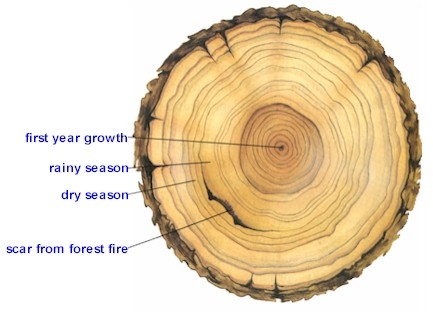
Garvey Berger makes use of some powerful imagery in her writing.  If found that her metaphor of growing in skills and knowledge like the rings of a tree as particularly useful.
"From our earliest days, each of us has been engaged in an ongoing journey to learn and to grow.  These two human forces are often connected, but they are not the same.  Learning can be about acquiring a new skill or knowledge base.  If I master PowerPoint in order to put together a slide show for a client, I have learnt something.  I have new information in my head.  But have I really grown?  From a developmental perspective, real growth requires some quantitative shift, not just in knowledge, but in perspective or way of thinking.  Growing is when the form or our understanding changes; we often call this "transformation."... Each moment of our development, then, is a potentially term form of mind that, with the right support, can be more expansive.  As we grow, the previous form is overtaken by the new form, leaving traces of less-mature form behind like rings in a tree trunk."

Overall Changing on the Job is a very engaging book with a global appreciation of what it means to develop as a leader.  I found that chapters 3 and 4 were the most theoretical (and therefore personally the harder parts to read), but that there were immensely power chapters towards the end - especially 'transformational habits of mind'.

I would recommend this book to teachers who, in a mentoring capacity, have students of leadership potential.  I found Changing on the Job made me better aware of the spectrum of leadership and how differently the student leaders may view the world to me.  I would also recommend this book to any teacher that is looking at the option of taking position of management.

Here is a YouTube clip which has Jennifer Garvey Berger presenting her own book.


This post relates to RTC#8. "Demonstrate in practice their knowledge and understanding of how ākonga learn." and RTC#7. "Promote a collaborative, inclusive and supportive learning environment."

Monday, March 23, 2015

Book Review

How Children Succeed : Grit, Curiosity and the Hidden Power of Character.  By Paul Tough


This is a book that I was very eager to read.  I'm a fan of education around character and believe that schools are charged with more than qualifications.   Paul Tough, himself a self confessed 'drop out' has taken the task of comparing intelligence with character.  I felt that this book was a good read and focused well upon the hidden curriculum.  

I felt myself linked closely to Paul's life experiences, he has a great chapter in there about being a father and looking deeply into the educational experience of children.  

Much of How Children Succeed  is based upon experience/case examples.  All of the ideas Paul presents are illustrated with some real life people and their ability to succeed where they would not expected to be.  

There were some very good quotes “The best way for a young person to build character is for him to attempt something where there is a real and serious possibility of failure.” (p. 85)  I think that this is something that our modern educational system can be guilty with.  We offer much of our assessment in 'low risk' assessments - I've never personally done a standard, I was raised in an examination environment where all the year was measured in a one off test.  [my preference is not for a major one off exam].  

Another thing for the plus side of How Children Succeed is the chapters he devotes to the study of chess and intelligence and determination.  

I would recommend this book for teachers, especially those with children.  Tough offers more in the way of observation than solution.  I found myself agreeing with much of Paul's points and enjoyed his illustrative writing style.  


Here is a nice YouTube clip where Paul is interviewed about his book.  


This post relates to RTC #12 - "Engaging with professional literature and reflecting on ones practice and RTC#5 


Sunday, June 8, 2014

OneNote Tutorial

One of my IT goals this year has been to incorporate electronic (online) systems into our school Appraisal system.  And to have that appraisal system be linked with...

  1. The 12 Registered Teacher Criteria (and the Tataiako Document) - so staff can track their progression through the professional standards.
  2. The review of the academic progress of our students through NCEA/NZC.
  3. Form and utilize expertise of colleagues on the staff in Professional Learning Communities (PLC's). 
The system that I've based this upon is Microsofts OneNote programme (and the work done by Botany Downs High School). 

Here is my instructional video on how to install the OneNote Appraisal document onto a school laptop...
[n.b. this is learning for me - my first embedded YouTube clip in a blog :-)]