FYI Planning
Here is the weekly staff planning document for week eight and nine.
Tuesday, March 29, 2016

Kamar Letters and Emails
Communication With Home.
One of the core goals of a modern education system is to enable the overall support of our students learning. Key to this is the communication with home (parents/caregivers). This was the focus of our recent Professional Development.
 This facet of modern education is a core focus for New Zealand schools. This has been identified and advanced in materials from the Education Review Office - "Parents, families and whänau have a primary and ongoing influence on the development, learning, wellbeing and self-efficacy of children and young people. Schools and educators have a significant role in engaging and involving parents, families and whänau in learning and school activities to enable success for all students." (p.29)
Student learning at home is actively promoted - this is best achieved if the students parents are informed of the learning that is taking place in school.
Here is the PowerPoint presentation in our staff meeting...
One of the core goals of a modern education system is to enable the overall support of our students learning. Key to this is the communication with home (parents/caregivers). This was the focus of our recent Professional Development.
 This facet of modern education is a core focus for New Zealand schools. This has been identified and advanced in materials from the Education Review Office - "Parents, families and whänau have a primary and ongoing influence on the development, learning, wellbeing and self-efficacy of children and young people. Schools and educators have a significant role in engaging and involving parents, families and whänau in learning and school activities to enable success for all students." (p.29)
Student learning at home is actively promoted - this is best achieved if the students parents are informed of the learning that is taking place in school.
Here is the PowerPoint presentation in our staff meeting...
Kamar Letters March 2016 from WaihiCollege
This post is related to RTC #1. "Establish and maintain effective professional relationships focused on the learning and well-being of ākonga." And ERO's School Evaluation Indicators Domain 3 "Educationally Powerful Connections and Relationships".
This post is related to RTC #1. "Establish and maintain effective professional relationships focused on the learning and well-being of ākonga." And ERO's School Evaluation Indicators Domain 3 "Educationally Powerful Connections and Relationships".
Week Seven Planning Document
FYI Planning
Here is the weekly staff planning document for week seven.
Here is the weekly staff planning document for week seven.
Class Numbers and Students Changing Classes
Managing Students into Classes.
The following presentation was made to staff in recognition of the pressures of the new year. Waihi College is working through a change in the demographic of students in the school.

Our intention here is to let staff know that we understand where they're at and to explain how we've got to where we are and to explain the next steps.
Much is made of the effects of class size. Any experienced teacher knows that you can afford more time with students in a smaller class. At Waihi College we've aimed primarily to get students into appropriate classes (for interest/talent/vocational direction) and then to manage the size (aiming to keep below 30).
This post is related to RTC #7. "Promote a collaborative, inclusive and supportive learning environment part ii. foster trust, respect and cooperation with and among ākonga." And ERO's School Evaluation Indicators Domain 4 "Responsive curriculum, effective teaching and opportunity to learn - students have effective, sufficent and equitable opportunities to learn".
The following presentation was made to staff in recognition of the pressures of the new year. Waihi College is working through a change in the demographic of students in the school.

Our intention here is to let staff know that we understand where they're at and to explain how we've got to where we are and to explain the next steps.
Much is made of the effects of class size. Any experienced teacher knows that you can afford more time with students in a smaller class. At Waihi College we've aimed primarily to get students into appropriate classes (for interest/talent/vocational direction) and then to manage the size (aiming to keep below 30).
This post is related to RTC #7. "Promote a collaborative, inclusive and supportive learning environment part ii. foster trust, respect and cooperation with and among ākonga." And ERO's School Evaluation Indicators Domain 4 "Responsive curriculum, effective teaching and opportunity to learn - students have effective, sufficent and equitable opportunities to learn".
2016 ART Mentoring
ART - Achievement Retention and Transition.
The following PowerPoint was presented at staff meeting to highlight the students at year 12 we need to target getting through NCEA Level Two.
This initiative is about best supporting the students through a pivotal year of schooling. NCEA Level Two is the minimal qualification for students seeking an apprenticeship, entry into a polytechnic course, or into the armed forces or police.
This post is related to RTC #1. "Establish and maintain effective professional relationships focused on the learning and well-being of ākonga." And RTC #7. "Promote a collaborative, inclusive and supportive learning environment part ii. foster trust, respect and cooperation with and among ākonga."
The following PowerPoint was presented at staff meeting to highlight the students at year 12 we need to target getting through NCEA Level Two.
This initiative is about best supporting the students through a pivotal year of schooling. NCEA Level Two is the minimal qualification for students seeking an apprenticeship, entry into a polytechnic course, or into the armed forces or police.
This post is related to RTC #1. "Establish and maintain effective professional relationships focused on the learning and well-being of ākonga." And RTC #7. "Promote a collaborative, inclusive and supportive learning environment part ii. foster trust, respect and cooperation with and among ākonga."
Tuesday, February 16, 2016
Week Three Planning
2016 Term One Week Three Itinerary
Week B.
59 days until the end of the term. That’s 46 school days.

Monday 15/2
|
Day Six. Staff Briefing (am). Farewell to Karen (pm). Board of Trustees Meeting (pm)
|
Drinks and nibbles in the pm.
|
Tuesday 16/2
|
Day Seven. Maths and Social Science Meetings (am). SLT Meeting (period two). Year 9 Planning Meeting (pm). NCEA Information Evening (pm)
| |
Wednesday 17/2
|
Day Eight. Staff Briefing (am). Year Seven Camp at Dickies Flat (departs at 9am from the bus bay). First Wednesday XPLORE sessions. Year 7 & 8 Planning Meeting (pm)
|
Student Leaders on camp today.
|
Thursday 18/2
|
Day Nine. Year Eight Teachers with Dean (am). Year Seven Camp.
|
House Leaders on camp today.
|
Friday 19/2
|
Day Nine. Year Seven Camp returns today (due back at 2:30pm). First XPLORE Friday programme.
|
Things that can be done this week…
- Update roll details to Sue. Who are the students that haven’t returned? Are there any incorrect addresses/phone numbers/ emails?
- Academic Calendars – these should now all be in.
- First contact home. Best practice is to make contact home with your classes – easy way is to use the kamar ‘letters’ section (if the emails are up to date then no cost. Good to; introduce yourself, highlight the goals ahead for the year, offer your contact details (email) to open communication lines.
- Setting up the kamar Markbook and ‘ticking’ the students into their standards (senior NCEA classes). This way students will be able to see how many credits they have available this year.
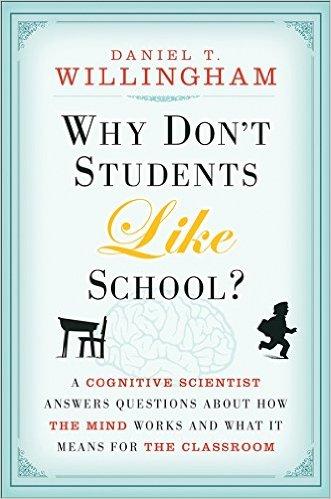
Food For Thought (linked to RTC #8. “Demonstrate in practice their knowledge and understanding of how ākonga learn”)…
“Contrary to popular belief, the brain is not designed for thinking. It’s designed to save you from having to think, because the brain is actually not very good at thinking. Thinking is slow and unreliable. Nevertheless, people enjoy mental work if it is successful. People like to solve problems, but not to work on unsolvable problems. If school work is always just a bit too difficult for a student, it should be no surprise that she doesn’t like school much.” Daniel T Willingham (2009)
n.b. Book available for staff to read.
The Five Best Classroom Managament Tips – Edutopia Website...
- Use a normal, natural voice,
- Speak only when the students are quiet and ready,
- Use hand and other non verbal communication,
- Address behaviour issues quickly and wisely,
- Always have a well designed and engaging lesson.
Rebecca Alber Edutopia
On The Horizon…
Next Week we have
|
This post relates to RTC#8. "Demonstrate in practice their knowledge and understanding of how ākonga learn." And ERO's School Evaluation Indicator - Domain Five : Professional Capability & Collective Capacity.
Sunday, October 18, 2015
Book Review
Educating Ruby : What Our Children Really Need to Learn
by Guy Claxton and Bill Lucas.
Guy Claxton and Bill Lucas are two of the worlds most prominent educational theorists. Guy Claxton is best known as the guru behind the 'BLP - Building Learning Power' movement in the United Kingdom (and expanding).
Educating Ruby (2015) is a modern view of the societal ills centered around education. Like many current education material Claxton and Lucas are very interested in the bigger picture of education. Why thinking about the meta idea of learning as opposed to curriculum or pedagogy. Having been familiar with BLP (book review coming shortly) I found much of Educating Ruby to be a companion document.

Whist this book is not specific to New Zealand's educational system (although some acknowledgements to our early childhood systems are made), Educating Ruby is equally valid reading for Kiwi teachers.
A strong case for curriculum review is made by Claxton and Lucas in Educating Ruby where hegemonic thinking about the 'heirarchy' of subjects is raised: “In school, subjects assume importance in inverse proportion to the amount of bodily activity they involve. If you can stay clean and still while you are learning, that is good, so maths and English come out at the top of the pecking order.” (p. 51) This is somewhat reflective of Waihi College's review of students vocational pathways.
Strong criticism is made of the supremacy of testing in education, whilst the authors a making specific reference to the UK system, NCEA easily is reflective. Teachers are under increasing pressures to get student through a myriad of assessments in 'preparation' for life after school. Questions are raised about the 'depth' of modern testing methods. Reference made to the work of Sugata Mitra and revolutionising what learning should be.
This post relates to RTC#8. "Demonstrate in practice their knowledge and understanding of how ākonga learn." and RTC#7. "Promote a collaborative, inclusive and supportive learning environment." And ERO's School Evaluation Indicator - Domain Five : Professional Capability & Collective Capacity.
by Guy Claxton and Bill Lucas.
Guy Claxton and Bill Lucas are two of the worlds most prominent educational theorists. Guy Claxton is best known as the guru behind the 'BLP - Building Learning Power' movement in the United Kingdom (and expanding).
Educating Ruby (2015) is a modern view of the societal ills centered around education. Like many current education material Claxton and Lucas are very interested in the bigger picture of education. Why thinking about the meta idea of learning as opposed to curriculum or pedagogy. Having been familiar with BLP (book review coming shortly) I found much of Educating Ruby to be a companion document.

Whist this book is not specific to New Zealand's educational system (although some acknowledgements to our early childhood systems are made), Educating Ruby is equally valid reading for Kiwi teachers.
A strong case for curriculum review is made by Claxton and Lucas in Educating Ruby where hegemonic thinking about the 'heirarchy' of subjects is raised: “In school, subjects assume importance in inverse proportion to the amount of bodily activity they involve. If you can stay clean and still while you are learning, that is good, so maths and English come out at the top of the pecking order.” (p. 51) This is somewhat reflective of Waihi College's review of students vocational pathways.
Strong criticism is made of the supremacy of testing in education, whilst the authors a making specific reference to the UK system, NCEA easily is reflective. Teachers are under increasing pressures to get student through a myriad of assessments in 'preparation' for life after school. Questions are raised about the 'depth' of modern testing methods. Reference made to the work of Sugata Mitra and revolutionising what learning should be.
This post relates to RTC#8. "Demonstrate in practice their knowledge and understanding of how ākonga learn." and RTC#7. "Promote a collaborative, inclusive and supportive learning environment." And ERO's School Evaluation Indicator - Domain Five : Professional Capability & Collective Capacity.
Passionate and Inspired Teachers
Inspired Teaching and Passionate Teachers
As a part of our work with Cognition Education and their Visible Learning Plus programme we looked today at the notion of 'inspired and passionate teaching'. I have a theory that because teaching is not the best paid profession that is out there the overwhelming majority of teachers have signed up to a life of education because of a great deal of personal inspiration and passion for learning.
 It is also a fact that teaching is a very hard profession as Guy Claxton and Bill Lucas put in their Educating Ruby book; “Teachers know that controlling crowds of bored teenagers, or squeezing a few extra children across an arbitrary assessment borderline, is not what lights their fire. It is not why they wanted to become teachers in the first place.” (2015, p. 31) Modern teaching is a process of continually fronting up in the classroom and doing your best. For most teachers levels of passion and inspiration will ebb and flow. It is a conscious effort for each individual teacher to monitor themselves.
Specific emphasis on 'passion and inspiration' is placed upon the quality of the relationships between the teacher and his/her students. That's something that is axiomatic for most teachers... yet strained teacher student relationship would be one of the most pressing issues in modern schooling.
Here is a copy of the PowerPoint presentation that we worked through last Monday.
This post relates to RTC #1. "Establish and maintain effective professional relationships focused on the learning and well-being of ākonga". And ERO's School Evaluation Indicators Domain 4 "Responsive Curriculum, Effective Teaching and Opportunity to Learn - students develop learning to learn capabilities."
As a part of our work with Cognition Education and their Visible Learning Plus programme we looked today at the notion of 'inspired and passionate teaching'. I have a theory that because teaching is not the best paid profession that is out there the overwhelming majority of teachers have signed up to a life of education because of a great deal of personal inspiration and passion for learning.

Specific emphasis on 'passion and inspiration' is placed upon the quality of the relationships between the teacher and his/her students. That's something that is axiomatic for most teachers... yet strained teacher student relationship would be one of the most pressing issues in modern schooling.
Here is a copy of the PowerPoint presentation that we worked through last Monday.
This post relates to RTC #1. "Establish and maintain effective professional relationships focused on the learning and well-being of ākonga". And ERO's School Evaluation Indicators Domain 4 "Responsive Curriculum, Effective Teaching and Opportunity to Learn - students develop learning to learn capabilities."
Wednesday, September 30, 2015
Book Review
Mindsets in the Classroom: Building a Culture of Success and Student Achievement in Schools. by Mary Cay Ricci
 Mindsets in the Classroom is a well written book for school leadership and teachers alike. It address Carol Dweck's (click here for book review) notions of fixed and growth mindsets. Mary works from many angles, student/parent/teacher/administrator. She presents a school wide systematic approach to embedding a growth mindset.
In all honesty I have been working under the fixed mindset for the majority of my career. With teaching of Mathematics I would regularly see the differences in students skill in my subject. As I've aged I can see more that 'skill' is often exposure. Those best at arithmetic most likely have had more exposure. Reading more about growth mindset the more benefit I see it in for a school community.
At it's heart growth mindset is about grit and determination. Seeing the challenge of learning and not shying away. I prefer a world where attitude takes you further than talent.
Mindsets in the Classroom begins by establishing the research on malleability of intelligence, quickly challenging educators to consider their own beliefs around IQ; “The first stop along the path to building a growth mindset culture is to begin to build a school culture that values intellectual growth with a staff who has internalized the belief that intelligence can be cultivated.” (p. 13)
Ricci uses real life examples to illustrate her points. A significant section of Mindsets in the Classroom is written for parents. Having three young ones I found this to be riveting reading and picked up some good tips. “When adults praise what a child ‘is’ such as tall or smart, the child attributes their accomplishment to a fixed trait they were born with. When adults praise actions or tasks that children ‘do’, the children attribute accomplishment with their own effort.” (p. 20)
There is a strong emphasis on quality pedagogy to complement growth mindsets. Specifically Ricci is critical of teaching that doesn't offer differentiation. That one of the core responsibilities of teachers it the ability to recognise the learning needs of the students and provide appropriate learning to those individuals. Tying in well with this was a comprehensive section on formative assessment, how to best use it, manage the data and react to what it says.
I enjoyed this book. I found that Ricci's ideas are well considered and easily communicated. I will use this and Dweck's material as key source for some staff professional development. I would recommend this book to any teacher or parent.
This post relates to RTC#8. "Demonstrate in practice their knowledge and understanding of how ākonga learn." and RTC#7. "Promote a collaborative, inclusive and supportive learning environment."
 Mindsets in the Classroom is a well written book for school leadership and teachers alike. It address Carol Dweck's (click here for book review) notions of fixed and growth mindsets. Mary works from many angles, student/parent/teacher/administrator. She presents a school wide systematic approach to embedding a growth mindset.
 In all honesty I have been working under the fixed mindset for the majority of my career. With teaching of Mathematics I would regularly see the differences in students skill in my subject. As I've aged I can see more that 'skill' is often exposure. Those best at arithmetic most likely have had more exposure. Reading more about growth mindset the more benefit I see it in for a school community.
At it's heart growth mindset is about grit and determination. Seeing the challenge of learning and not shying away. I prefer a world where attitude takes you further than talent.
Mindsets in the Classroom begins by establishing the research on malleability of intelligence, quickly challenging educators to consider their own beliefs around IQ; “The first stop along the path to building a growth mindset culture is to begin to build a school culture that values intellectual growth with a staff who has internalized the belief that intelligence can be cultivated.” (p. 13)
Ricci uses real life examples to illustrate her points. A significant section of Mindsets in the Classroom is written for parents. Having three young ones I found this to be riveting reading and picked up some good tips. “When adults praise what a child ‘is’ such as tall or smart, the child attributes their accomplishment to a fixed trait they were born with. When adults praise actions or tasks that children ‘do’, the children attribute accomplishment with their own effort.” (p. 20)
There is a strong emphasis on quality pedagogy to complement growth mindsets. Specifically Ricci is critical of teaching that doesn't offer differentiation. That one of the core responsibilities of teachers it the ability to recognise the learning needs of the students and provide appropriate learning to those individuals. Tying in well with this was a comprehensive section on formative assessment, how to best use it, manage the data and react to what it says.
I enjoyed this book. I found that Ricci's ideas are well considered and easily communicated. I will use this and Dweck's material as key source for some staff professional development. I would recommend this book to any teacher or parent.
This post relates to RTC#8. "Demonstrate in practice their knowledge and understanding of how ākonga learn." and RTC#7. "Promote a collaborative, inclusive and supportive learning environment."
Sunday, September 27, 2015
Book Review
Mindset : The new psychology of success - How we can learn to fulfill our potential by Carol S. Dweck

Mindset is a book that I have heard constantly being referred to. Written originally in 2006 by Colombia professor Carol Dweck it has since reached to top of many best seller lists.
Mindset is an unusual book because it is at it's heart a psychology book, but it's core message is so clear and logical that it is quite at home in the self help section of a bookstore.
Dweck presents a very simple idea that there are two dominant mindsets that exist in people; fixed and growth. These mindsets boil down to the notion of whether you believe in inherent talent (e.g. fixed I.Q.) or developed skill.
Dweck's team of researchers were investigating the effects of praise on students when it came to challenge. Namely the type of praise (where it be of a talent or of a disposition). They found that children when praised for intelligence or brains would be more likely to quit than children praised for tenacity or determination.
Mindset is an important book for all educators. Schools by there inherent nature are about feedback and praise. Teachers are in a uniquely powerful position to empower (or hinder) the progress of students with our words. Dweck puts it "The view you adopt for yourself profoundly affects the way you lead your life. It can determine whether you become the person you want to be and whether you accomplish the things you value." (p. 6)
Mindsets can form from the smallest of things. There are ample well presented stories (many involving teachers) which Dweck uses well to illustrate the importance of cultivating mindsets. I found chapters on sports stars mindsets to be a powerful section - I recognised the sports stars better than the business illustrations. Mindset is written extremely well for a University Professor, at only 246 pages I finished it of in a day.
I felt before reading this book that I had a very good handle on the psychology of learning. But there were some basic errors I have been making - especially around praising students. For example "telling students they're smart, in the end made them feel dumber and act dumber, but claim they were smarter." (p. 74).
I would definitely recommend Mindset to all teachers from any curriculum area. For senior leaders Mindset has an excellent section illustrating the dangers of having a fixed mindset in management. A very good read indeed.
This post relates to RTC#8. "Demonstrate in practice their knowledge and understanding of how ākonga learn." and RTC#7. "Promote a collaborative, inclusive and supportive learning environment."

Mindset is a book that I have heard constantly being referred to. Written originally in 2006 by Colombia professor Carol Dweck it has since reached to top of many best seller lists.
Mindset is an unusual book because it is at it's heart a psychology book, but it's core message is so clear and logical that it is quite at home in the self help section of a bookstore.
Dweck presents a very simple idea that there are two dominant mindsets that exist in people; fixed and growth. These mindsets boil down to the notion of whether you believe in inherent talent (e.g. fixed I.Q.) or developed skill.
Dweck's team of researchers were investigating the effects of praise on students when it came to challenge. Namely the type of praise (where it be of a talent or of a disposition). They found that children when praised for intelligence or brains would be more likely to quit than children praised for tenacity or determination.
Mindset is an important book for all educators. Schools by there inherent nature are about feedback and praise. Teachers are in a uniquely powerful position to empower (or hinder) the progress of students with our words. Dweck puts it "The view you adopt for yourself profoundly affects the way you lead your life. It can determine whether you become the person you want to be and whether you accomplish the things you value." (p. 6)
Mindsets can form from the smallest of things. There are ample well presented stories (many involving teachers) which Dweck uses well to illustrate the importance of cultivating mindsets. I found chapters on sports stars mindsets to be a powerful section - I recognised the sports stars better than the business illustrations. Mindset is written extremely well for a University Professor, at only 246 pages I finished it of in a day.
I felt before reading this book that I had a very good handle on the psychology of learning. But there were some basic errors I have been making - especially around praising students. For example "telling students they're smart, in the end made them feel dumber and act dumber, but claim they were smarter." (p. 74).
I would definitely recommend Mindset to all teachers from any curriculum area. For senior leaders Mindset has an excellent section illustrating the dangers of having a fixed mindset in management. A very good read indeed.
This post relates to RTC#8. "Demonstrate in practice their knowledge and understanding of how ākonga learn." and RTC#7. "Promote a collaborative, inclusive and supportive learning environment."
Subscribe to:
Posts (Atom)